
Medina County faces multi‑year water and sewer rate increases to cover $50M+ capital plan
Get AI-powered insights, summaries, and transcripts
Subscribe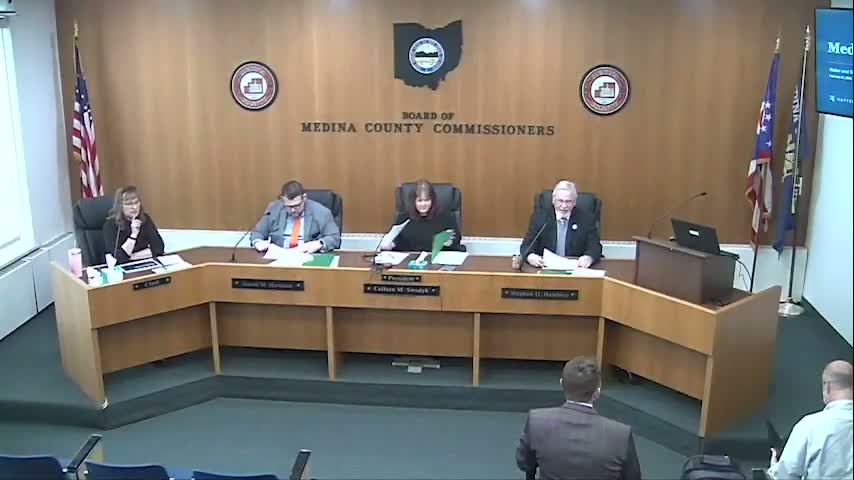
Summary
A Raftelis study presented to the Medina County Board of Commissioners recommends phasing in rate increases to fund more than $50 million in water and sewer improvements, with debt‑driven 'debt fee' hikes in early years that would raise the typical combined water and sewer bill by roughly 6–7% annually over six years.
A consultant told Medina County commissioners on Wednesday that aging infrastructure and a slate of capital projects will require phased rate increases for the county’s water and sewer utilities.
"We put together a rate study for the water and sewer funds just looking at the total cost of the system and really what revenues and rates are needed in order to cover the cost of the systems," said Scott Hadler of Raftelis, the consultant hired to perform the analysis. He said the firm modeled both operating cost increases and debt service tied to planned projects.
The study identifies several large projects driving the increases: a Brunswick Hill water tower, an expanded Westfield water plant project (about $23 million in the study), and major sewer projects including Chippewa wastewater treatment plant upgrades and a Liverpool plant estimate included in planning in the range of hundreds of millions of dollars. Hadler told the board the plan uses existing cash reserves to soften up-front impacts and phases debt service in to avoid a single sharp increase.
Hadler summarized the proposed impact: the county’s combined water and sewer bill for an average household (assumed 5,000 gallons/month) would see roughly a 6.7–7% annual increase on average over a six‑year period. On the water side he outlined components of the bill that would rise, noting the 'debt fee' — a fixed monthly charge intended to cover debt service — drives much of the immediate percentage change. "While the percentages are kind of deceiving," he said, "it's just one component of that bill."
Commissioners pressed the consultant on alternatives that would spread the increase more evenly or defer some projects. One commissioner said the presentation's schedule that shows heavy early increases followed by near‑zero increases later was hard to believe; Raftelis responded those later zeros reflect no additional debt in the current capital plan, but acknowledged future boards could add projects that would change the profile.
Jeremy Cinco, the county’s sanitary engineer, joined the presentation and identified particular capital items in the near term, including the Brunswick Hill tower and the Westfield projects. Commissioners emphasized protecting fixed‑income households and asked about timing and possibilities to smooth the increases; Hadler said phasing the increases and revisiting the plan every three years is a common approach.
The board did not take an immediate vote on new rates at Wednesday’s meeting. Raftelis recommended the county consider a three‑year rate cycle and return with refined numbers — including regional comparables and any updated project timing — before adopting a final rate schedule. The commission said it will continue to review the study and consider public outreach and additional modeling ahead of any rate ordinance. The next procedural step is to refine project timing and debt schedules and present a recommended rate schedule for adoption.