Get Full Government Meeting Transcripts, Videos, & Alerts Forever!
Get email alerts on the Fda Regulatory Policy topic
No spam. Unsubscribe anytime.
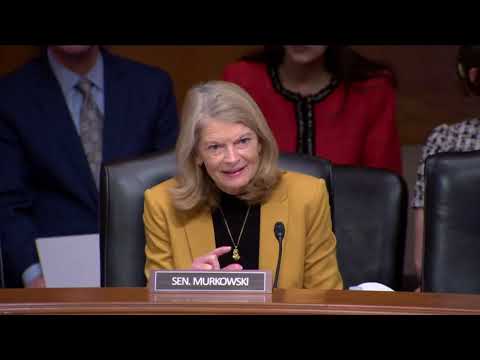
Sen. Murkowski presses for faster FDA approval paths for ALS and other rare conditions
Summary
Senator Murkowski questioned hearing participants about using 'common sense' in FDA regulatory decisions to speed access to ALS treatments, and the chair responded that the regulatory process should be customized to disease rarity and patient need.
Senator Murkowski pressed hearing participants on whether the FDA can and should speed access to treatments for amyotrophic lateral sclerosis and other rare conditions, saying patients have limited time to wait for traditional approval processes.
"The FDA's accelerated approval pathway has really been important and I think very promising for treatments for ALS and...some other rare diseases," Murkowski said, asking whether use of digital measures fits within what she called a 'common sense' regulatory approach.
The chair replied that regulators must "customize the regulatory process to the condition that we're trying to be able to offer hope for," saying that requiring two randomized controlled trials is impractical for diseases that affect very small numbers of people. The chair queried why approval times often take a decade and raised examples of therapies approved earlier in Europe than in the United States.
Both speakers framed the discussion around earlier access balanced with safety. The chair suggested reviewing whether some products must remain prescription-only, citing continuous glucose monitors and blood-pressure monitoring as technologies that could help prevent disease if more widely available.
Senator Murkowski acknowledged safety responsibilities but said she and other advocates will press for accelerated, population-appropriate pathways. There was no formal vote or binding decision during the exchange; the hearing discussion remained at the level of questioning and commitments to continue engagement.