Get Full Government Meeting Transcripts, Videos, & Alerts Forever!
Get email alerts on the Wildlife Protection topic
No spam. Unsubscribe anytime.
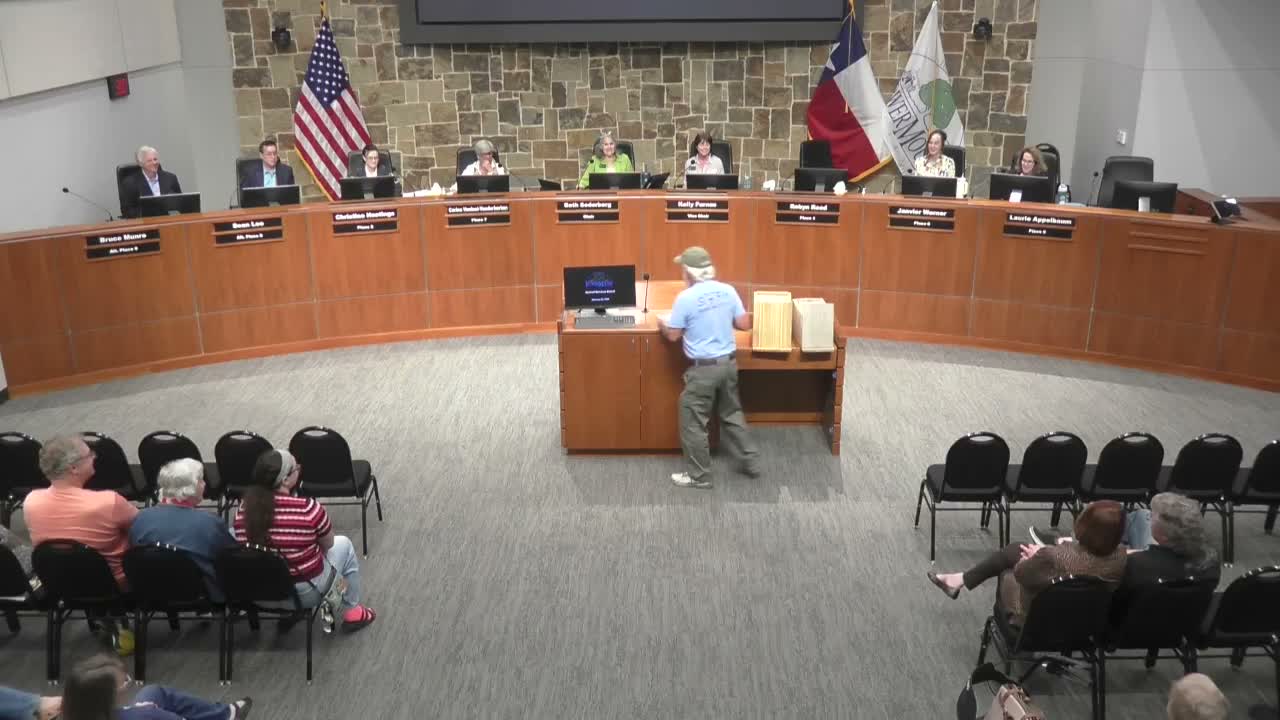
Volunteer urges limits on rodenticides, describes owl-box program at Flower Mound Animal Services Board meeting
Summary
Resident volunteer David McCarty told the Flower Mound Animal Services Board that owl boxes and community monitoring have produced extensive local data and warned that common rodenticides can poison raptors up the food chain; he urged community alternatives and offered construction and maintenance advice.
David McCarty, a Flower Mound resident who volunteers with a local screech-owl monitoring group, told the Flower Mound Animal Services Board on March 1 that community-installed owl boxes can help conservation and public education — but only if the town and residents address maintenance and the dangers of rodenticides.
McCarty said the private, membership-based group has nearly 3,000 people and uses cameras to document breeding and nesting. “Just a little residue of rodenticide in that animal can and will kill our owls,” he said, describing how poisoned rodents are eaten by raptors and other predators. He urged residents to stop using common rodenticide bait boxes and to consider alternatives such as sterilization products or live-capture traps while noting those newer products lack long-term studies.
The presentation outlined practical guidance for residents and volunteers. McCarty recommended cedar boxes with a front opening rather than a top hinge, said typical placement ranges from about 8 to 30 feet high and advised locating boxes where people can observe them. He described routine maintenance problems — especially squirrels that fill boxes with nesting material — and suggested the sheltering groups or a town partner commit to periodic cleaning.
Audience members and board members asked technical questions about construction and cameras. McCarty said many groups use battery-powered security cameras (he mentioned Arlo among brands) to capture short video clips of eggs, nest activity and fledging. On construction time he joked it takes “about three beers” to build a box but gave detailed wood and bedding recommendations (red cedar, coarse bedding, diatomaceous earth in the base to deter ants).
Jackie Norell, chair of the Flower Mound Historical Commission, praised the Animal Services Board and said the historical commission will support the board’s work. Becky Bertone announced a related community program at the Flower Mound Library — a March 10, 7 p.m. class on certifying yards as wildlife habitat — that she said ties into the board’s owl project and a pollinator photography exhibit running through March 15.
The board did not take formal action on McCarty’s recommendations during the meeting. It incorporated community feedback into a later discussion about forming a subcommittee to develop a public-facing “Who’s in the Shelter” visibility program and outreach plans to support shelter work.
The board adjourned at 7:20 p.m.