Get Full Government Meeting Transcripts, Videos, & Alerts Forever!
Get email alerts on the Health Care Subsidies topic
No spam. Unsubscribe anytime.
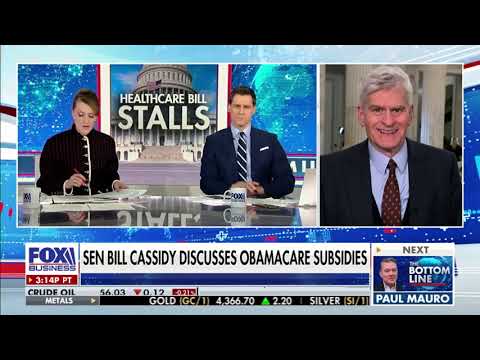
Sen. Bill Cassidy says GOP will press patient-directed changes as House moves to extend 'Obamacare' subsidies
Summary
Sen. Bill Cassidy told interviewers the House bill to extend enhanced "Obamacare" subsidies will reach the Senate and that Republicans will press for measures that direct dollars to patients rather than insurers; Cassidy cited families facing very large premiums and said any Senate measure would reflect the president's priorities.
Sen. Bill Cassidy, chairman of the Senate Health Committee, said in a televised interview that the House bill to extend enhanced "Obamacare" subsidies will come to the Senate and that Republicans will push changes that "give power to the patient, not profit to the insurance company."
Cassidy made the comments after the program's host observed that a three-year extension passed the House with support from four Republicans and warned the measure could cost "about $30,000,000,000 a year in borrowed taxpayer dollars." The host also noted the Senate had previously voted down an extension.
Cassidy framed a GOP approach as shifting assistance away from insurers and toward patients. "He only wants a bill which gives power to the patient, not profit to the insurance company," Cassidy said, describing President Trump's priorities and saying any Senate action would include those "marching orders."
Cassidy also described the scale of premium burdens he says some families face. He said there is a "select group of people in their fifties and sixties who make roughly 80,000 a year" and that under current rules "their premium is $33,000 a year after tax." Cassidy said those pressures will push some people toward employer-provided coverage and gave a pastor-and-wife example of families "stuck with $30,000 bills."
The interview did not record a Senate vote or committee action; Cassidy said the House bill would reach the Senate and that Republicans would seek to shape any compromise to reflect the president's stated priorities.
What happens next depends on whether the Senate offers a vehicle that extends the enhanced subsidies and the form of any concessions to address Republican priorities.