Get Full Government Meeting Transcripts, Videos, & Alerts Forever!
Get email alerts on the Local History Presentation topic
No spam. Unsubscribe anytime.
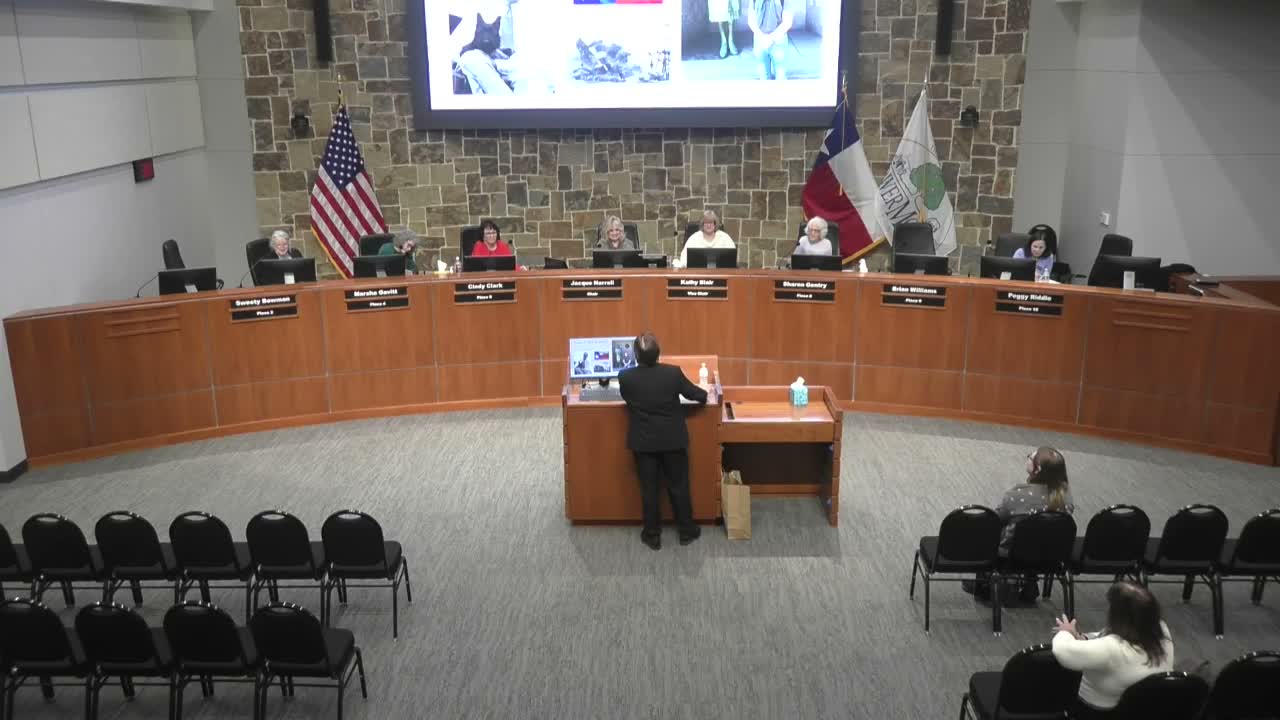
Coppell teacher Joshua Chanin outlines Texas’s wartime role, brings artifacts to Flower Mound Historical Commission
Summary
Joshua Chanin, a Coppell High School history teacher and author, told the Flower Mound Historical Commission that Texas’ camps, oil production and shipbuilding were pivotal in World War II and displayed artifacts from his research and book. He offered signed copies and left items for commissioners to inspect.
Joshua Chanin, a Coppell High School history teacher and author, told the Flower Mound Historical Commission on Jan. 20 that Texas played a central role in the United States’ World War II effort, citing troop training, military camps, oil production and shipbuilding.
Chanin, introduced by the commission, walked members through examples from his archival research and classroom teaching. He noted Texas training facilities such as Camp Maxey and Camp Fannin, and described how large oil fields and pipeline projects — including the wartime Big Inch and Little Big Inch pipelines — helped move fuel for Allied operations. “With its vast land, strategic location and strong tradition of service, Texas became a cornerstone of America’s wartime efforts,” Chanin said.
Chanin also discussed home-front contributions: the growth of wartime industry, women’s labor in factories and the work of civilian groups such as the Women Airforce Service Pilots. He displayed several artifacts from his collection — including a World War II-era gas mask, service binoculars and a D-Day paratrooper ‘cricket’ clicker — and explained their uses and provenance. Chanin offered signed copies of his book and left the artifacts for commission members to view.
Commissioners and attendees asked few questions; commissioners applauded the presentation and expressed appreciation for Chanin’s research and willingness to share materials with the commission’s archives and programs. The talk was positioned as a kickoff for the commission’s January meeting and as material that could inform future exhibits and oral-history projects.
The presentation drew on Chanin’s academic work and primary sources he consulted for his book; he said parts of the research began as his master’s thesis at the University of Texas at Arlington. He emphasized using documented sources and encouraged commissioners to consult primary materials when developing local exhibits.
The commission did not take any formal action on the presentation. The commission’s next regular meeting was scheduled for Feb. 17, with planning discussions underway for future exhibits.