Get Full Government Meeting Transcripts, Videos, & Alerts Forever!
Get email alerts on the Impact Fees topic
No spam. Unsubscribe anytime.
Okeechobee County adopts new impact‑fee ordinance after contested public hearing
Summary
The Board of County Commissioners voted unanimously to adopt Ordinance 2026‑0001 to reintroduce impact fees for parks, transportation, fire/EMS, law enforcement, schools and other categories; consultants outlined methodology, developers raised legal concerns, and county attorneys said the adoption complies with state law.
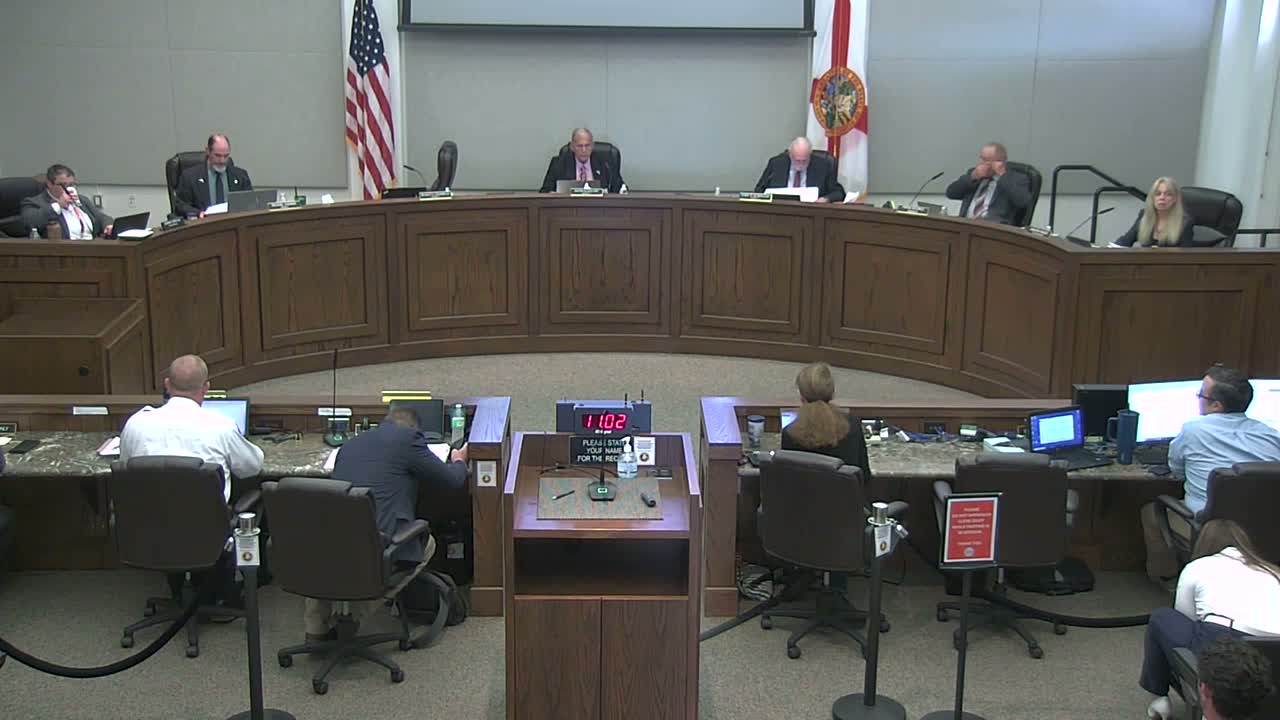
The Okeechobee County Board of County Commissioners on Feb. 13 adopted Ordinance 2026‑0001, a new impact‑fee ordinance that sets one‑time development fees across parks, public facilities, library, corrections, law enforcement, fire and EMS, schools and transportation.
County planning staff and consultant Mike Woodward of Kimley‑Horn & Associates presented the methodology behind the fee schedule at the meeting, explaining that fees were calculated using local inventories of land, facilities and vehicles, plus an equivalent development unit conversion to translate different development types into per‑person impacts. "Per statute, we use local data to perform the calculations," Woodward said during the presentation, noting the study inventory and level‑of‑service assumptions.
The ordinance — the second reading and final adoption — drew public comment from local developers and industry groups. The Economic Council and some business representatives urged adoption, saying fees ensure new development pays for the capital costs it creates. "Are the new people coming in going to pay for infrastructure, which is what we think is fair?" one Economic Council speaker asked.
Opposing comments included a legal warning from the Treasure Coast Builders Association’s representative, who said fees above 50 percent without proof of "extraordinary circumstances" have been challenged in other Florida counties and could expose the county to litigation. The county attorney responded that the county previously repealed impact fees in 2014 and is now adopting a new fee ordinance; she said staff believe the county is compliant with applicable Florida statutes and the Senate Bill 180 constraints raised by the speaker.
Commissioner Burrows moved to adopt the ordinance, seconded by Commissioner Sumner; the motion carried unanimously. Staff said the fees will take effect for qualifying building permits 90 days after adoption (staff estimated May 13, contingent on permit timing).
Why it matters: The fees will create a new, dedicated revenue stream intended to fund capital improvements required by new development rather than relying on existing taxpayers. Consultants emphasized that, by statute, impact fees must be tied to a localized study and to capital (not maintenance) needs. Developers warned of potential economic effects on commercial projects and of legal risk if statutory thresholds are not carefully documented.
What’s next: County staff will implement the fee schedule and the fee calculator the consultant supplied. The board and staff also noted ongoing conversations about credits for developer‑funded improvements and interlocal arrangements for collection with the city and school district.
Provenance: topicintro SEG 2258; topfinish SEG 3036