Lifetime Citizen Portal Access — AI Briefings, Alerts & Unlimited Follows
NAC chair Paul urges a 'requirements pull' approach to link federal labs with industry
Loading...
Summary
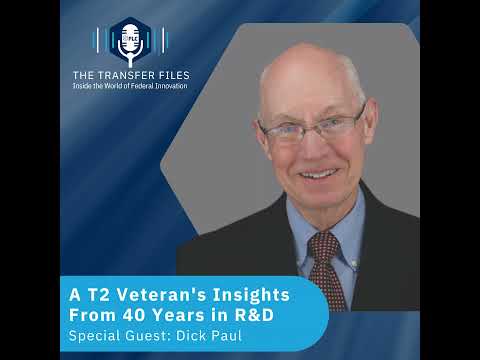
On The Transfer Files podcast, Paul, chair of the Federal Laboratory Consortiums National Advisory Council, described barriers that keep startups and industry from finding federal lab technologies and advocated a strategic, industry-driven 'requirements pull' approach to improve tech transfer.
Paul, chair of the Federal Laboratory Consortium for Technology Transfers National Advisory Council, told listeners on The Transfer Files podcast that the consortiums 50th anniversary is an opportunity to sharpen how federal labs connect technologies with nonmilitary users.
"At the 99% level, [industry] are not aware," Paul said of industry knowledge about federal labs and technology transfer mechanisms, describing a persistent awareness gap that is especially acute among startups.
Why it matters: federal labs host thousands of technologies that can be adapted for civilian uses, but industrys limited awareness and the federal bureaucracys complexity often block commercialization. Paul said this limits the public benefit of lab research and slows the path from discovery to products used by everyday people.
Paul distinguished two goals he said labs must balance. "Transitioning technologies to the warfighter" is the military-focused metric, he said, while "transfer" means adapting those same technologies for nonmilitary applications such as healthcare or school-bus safety. He argued that many labs measure success primarily by transition, which can underemphasize transfer to civilian markets.
To close the gap, Paul urged what he called a "requirements pull" strategy: identify industry needs first, then search federal labs for solutions, rather than broadly pushing every lab technology out to the marketplace and hoping something sticks. "A tech push approach ... is fairly inefficient," he said, adding that labs should be strategic and focus resources where the probability of success is highest.
Paul drew on his experience in government and industry to illustrate the point. After a 33-year Air Force career that included command of the Air Force Research Laboratory, he moved to Boeings research office and saw firsthand that industry often prefers to acquire technology rather than invent it in-house. "Industry really is hungry for and seeking external technologies," he said.
He also addressed how to make those connections in practice: federal labs should attend industry conferences (he cited SBIR Phase 2 events), host lab days to give industry access to scientists and engineers, and design processes that are not personality-dependent but sustainable over time. "That's who industry really wants to talk to," Paul said, urging labs to make scientists and engineers available for outreach.
On the role of volunteers and the NAC, Paul described the National Advisory Council as a diverse, unpaid group that offers nonfederal perspectives to FLC leadership on topics such as manufacturing linkages, strategic planning and regional versus functional engagement models. He said the NAC focuses on work FLC leadership requests and tries to add value by bringing seasoned, cross-sector insight.
Paul noted changes from the COVID era: virtual and hybrid formats have expanded access, letting federal lab staff participate in training and events they previously could not afford to travel to. He recommended leveraging virtual tools alongside in-person interactions to reach a broader range of lab professionals.
Practical resources: Paul encouraged federal lab staff to tap the FLCs centralized training and the FLC Learning Center for courses and webinars, and to pursue volunteer opportunities on FLC committees. He directed listeners to federallabs.org for details on getting involved.
The episode closed with Paul reflecting on the many everyday products that have roots in federal lab research and the difficulty of preserving an audit trail once industry builds on early discoveries. Host Andrea Nelson thanked Paul for sharing his experience and guidance.
Next steps: the podcast signaled ongoing FLC programming, training and volunteer opportunities aimed at strengthening the pathway from federal laboratory discoveries to commercial and public-sector use.