Lifetime Citizen Portal Access — AI Briefings, Alerts & Unlimited Follows
NIH consolidates tech-transfer records into single system, winning 2024 FLC award
Loading...
Summary
The NIH’s Office of Technology Transfer built the Enterprise Technology Transfer (ETT) system to combine records from nine platforms into a single searchable database — more than 13 million records by the podcast’s account — improving access, reporting and external sharing, and earning a 2024 Federal Laboratory Consortium award.
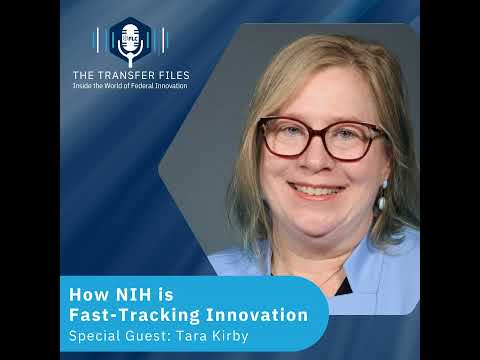
Tara Kirby, director of the Office of Technology Transfer at the National Institutes of Health, described a multi-year effort to centralize NIH’s tech-transfer records into a single platform she said has already improved access and reporting.
"In the old days, if someone needed information from leadership or some other component of the NIH that covered everything in tech transfer from all the institutes, most of the time, we would have to go asking each institute ... And now it's all in one system. We can pull it up right away and say, 'here you go,'" Kirby said, summarizing the practical benefit of the new Enterprise Technology Transfer system, or ETT.
The podcast introduction said the NIH consolidated more than 13 million records from nine separate databases over five years and that the effort won a 2024 award from the Federal Laboratory Consortium for Technology Transfer (FLC). Kirby traced the system’s origin to an OTT-led needs assessment, a competed procurement (the vendor named was Intium) and a multistage migration process that she said required extensive testing and community engagement.
Kirby said the technical migration itself was executed in a week but followed months of testing to ensure fields merged correctly and that duplicate company or partner records could be reconciled. She credited a governance group of senior tech-transfer staff and a user group of subject-matter experts with guiding configuration and adoption across NIH institutes.
The Office of Technology Transfer’s role, Kirby said, is to provide NIH-wide coordination and reporting while many institutes maintain their own tech-transfer offices. She described practical steps OTT took to align data and processes across those differing systems so reporting to external entities (she mentioned NIST) would be consistent.
Kirby described continuing work: developing standard operating procedures for complex areas such as licensing records, ongoing community training and fixing issues found after migration. She said the team kept backups of legacy systems specifically to recover any critical fields discovered to be missing after migration.
Beyond internal benefits, Kirby said ETT has already improved public-facing information: better abstracts and more complete online patent and technology listings that can be connected to external services. "We're using that also to connect with other systems like the Federal Laboratory Consortium to get our information about our technologies out there," she said, adding that some licensing details will remain confidential for business reasons.
Looking ahead, Kirby said the office plans an automated, ideally daily, patent feed so NIH patent listings remain current with minimal manual work. She also pointed to possible applications of artificial intelligence — for marketing, partner discovery and even drafting licensing options — while stressing care around confidential business information.
The office’s work to centralize records and improve transparency, combined with the FLC award, signals a broader effort to make NIH technologies easier for potential partners and licensees to find and evaluate. Kirby said that while the system opens new possibilities, further refinements and user-driven changes are expected as the NIH community continues to adopt ETT.
The podcast directs listeners to the episode page on federallabs.org for more information about Kirby, ETT and related episodes.