Get Full Government Meeting Transcripts, Videos, & Alerts Forever!
Get email alerts on the Grant Funding topic
No spam. Unsubscribe anytime.
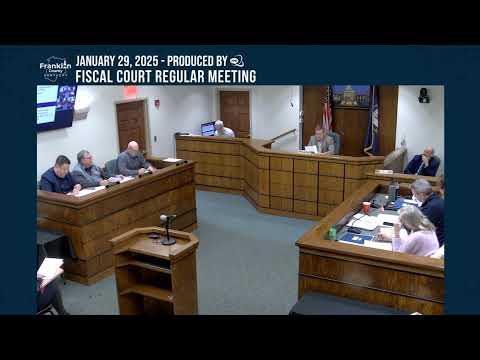
County approves MOU and signs onto grant plans to fund prevention specialist and family reentry services
Summary
Fiscal court approved an MOU to act as fiscal agent for local nonprofits and approved moving forward on a Second Chance Act DOJ application with the Wanda Joyce Robinson Foundation as subrecipient; the court budgeted a 5% fiscal oversight fee per grant year and discussed county responsibility for benefits for a prevention specialist housed in the county attorney’s office.
The Franklin County Fiscal Court voted to approve a memorandum of understanding to serve as fiscal agent for the Wanda Joyce Robinson Foundation and to support grant applications aimed at prevention and services for families affected by incarceration.
Belinda, speaking for county grant staff, said the foundation plans to apply for a Department of Justice Second Chance Act grant for $750,000 over three years and that the court would budget 5%—about $12,500 per year—as a fiscal oversight fee if the county serves as grantee. Belinda told the court federal grant administrators considered that 5% an appropriate administrative allocation and said the county could adjust budgets during the grant period if necessary.
County leaders also discussed creating a prevention specialist position to work with juveniles at risk of opioid misuse and related supports. The county attorney said that housing the position in the county attorney’s office would provide the specialist access to court resources and school and social‑service connections; the county attorney said the approach is intended to expand early prevention and reduce future adult incarceration.
Commissioners raised administrative questions: whether the county or the subrecipient would maintain long-term records and how benefits and payroll obligations would be handled. The treasurer provided a cost estimate for benefits and payroll taxes—about $22,000 annually, roughly $10,000 for a mid‑year start—and said that had not been budgeted. The court approved the MOU and the resolution to apply for the Second Chance Act program and discussed options to be the fiscal agent for similar grant work going forward.
The court also discussed opioid‑abatement grant draws and the possibility of serving as fiscal agent more broadly to streamline drawdowns and respond quickly when federal funding opportunities become available. No final decisions were made on staffing beyond committing to evaluate budget and benefits impacts in follow-up work.