Get Full Government Meeting Transcripts, Videos, & Alerts Forever!
Get email alerts on the Economic Development topic
No spam. Unsubscribe anytime.
Ironton tourism director highlights bridge reopening, multi‑million grants and heritage trail plans
Summary
Lawrence County Convention and Visitors Bureau director Marty Copley told the Ironton City Council the recently reopened bridge and several federal and state grants — including a $12 million Ohio waterways award and a $1.5 million ARC tourism grant — could boost regional tourism, historic‑site preservation and local economic activity.
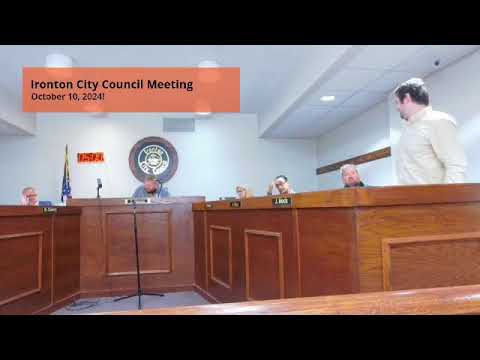
Marty Copley, director of the Lawrence County Convention and Visitors Bureau, told the Ironton City Council on Oct. 10 that the bridge into the area reopened earlier that day and that several tourism and waterfront projects are poised to drive visitors and economic activity.
Copley said the county was selected for a Recreation for Rural Economies (RREC) assistance program that connected local leaders with about 18 federal partners, from the U.S. Environmental Protection Agency to the U.S. Department of Agriculture, to identify riverfront and recreational assets that could be developed for economic benefit. “We were chosen 25 out of 25 in the nation,” he said, describing federal collaboration on site assessments.
He named recent and pending funding that officials expect to affect the area, including a $12,000,000 award through Ohio’s waterways initiative for waterfront projects and a $1,500,000 Appalachian Regional Commission grant for the Appalachian Freedom Heritage Tourism Initiative. That ARC grant, he said, will support research and interpretation across a planned network of Underground Railroad sites; the program team has identified about 50 candidate locations and expects the project to mark 27 sites in an initial phase, pending National Park Service review.
Copley described a technological component that would place QR codes at signed sites linking visitors to site histories, videos and interviews: “Folks can use a QR code on each one of the sites that they go and visit, and it’s gonna bring all the website, videos, content, interviews,” he said, adding that the material could be used by students and distant audiences.
Council members asked about tourist signage and how businesses qualify for blue freeway signs; Copley said an application process and third‑party verification typically require evidence of visitation and that some sites pay annual fees. He also said the bureau is working on regional marketing with neighboring states and on local event promotion; he offered to provide council members printed materials and further follow‑up.
Why it matters: The visitor infrastructure and grant dollars Copley described aim to increase out‑of‑area tourism, preserve historic sites and generate local business revenue. The council’s questions focused on implementation details — signage, measurements of visitation and coordination with lodging hosts — that will determine how quickly the economic benefits are realized. The council did not vote on funding or policy during the presentation.
Looking ahead: Copley left information with the council and offered to follow up on signage requirements, grant timelines and regional marketing steps.