Get Full Government Meeting Transcripts, Videos, & Alerts Forever!
Get email alerts on the Power Mobility topic
No spam. Unsubscribe anytime.
Presenter outlines power-mobility loan program for students
Summary
A presenter described a school-based program that loans power wheelchairs for short trials, provides professional development for school teams, and expanded after donations and foundation fundraising that purchased four new chairs.
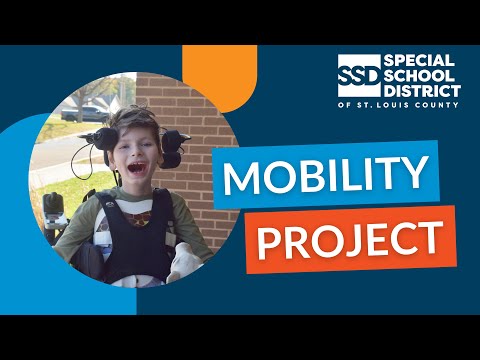
A presenter described a power-mobility loan program that lets students with mobility challenges try power wheelchairs to gain independent movement and support learning, communication and development. “The beauty of the program is it gives the kid a chance to explore movement,” the presenter said.
The presenter said the program maintains an inventory of loaner power wheelchairs and that trials start when a physical or occupational therapist completes a referral form with the student’s measurements and an indication of how the student might control a chair (for example, with a joystick, a head array or other switch access). Program staff provide professional development and attend many students’ first trials, after which the school team continues daily mobility exploration.
A staff member described how staff demonstrate movement for students—moving a child’s head to show the chair will move, repeating the demonstration several times and then letting the child try—and emphasized that mistakes such as bumping into objects are a normal part of learning depth perception and spatial limits. “You learn about depth perception,” the staff member said. “A lot of our kids have not moved independently, so they’ll get the chair too close to something because they don’t realize how big the chair is.”
The presenter shared brief student examples to illustrate benefits: one student excited to use a chair to play basketball, a student with dystonia who finds movement calming, and a student who hopes to go shopping with her mother and travel to Florida if she can use a power chair more freely.
The program’s expansion was supported by donated equipment and vendor assistance. The presenter thanked families and local wheelchair representatives from Quantum, Invacare and Permobil for donated chairs and credited ATPs and local vendors (named in the presentation as New Motion and Alliance) for repairs and technical help. The presenter said that last year the Special Education Foundation began fundraising and that donors enabled the purchase of four new Invacare power wheelchairs equipped with adaptive switch lab head arrays and custom seating and positioning supports from Motion Concepts and Freedom Designs.
After trials, teams collect data on student impacts and discuss next steps for powered mobility on a case-by-case basis. The presenter emphasized that the program has increased collaboration and professional growth among staff: “it truly takes a village,” the presenter said, and staff have become more effective at supporting student mobility. The presenter added that one of the greatest impacts is how power mobility changes others’ perceptions of students and how educators interact with and teach them.
Program staff said they will continue trials, training and data collection so school teams can make individualized recommendations about longer-term powered mobility for students.