Get Full Government Meeting Transcripts, Videos, & Alerts Forever!
Get email alerts on the County Government topic
No spam. Unsubscribe anytime.
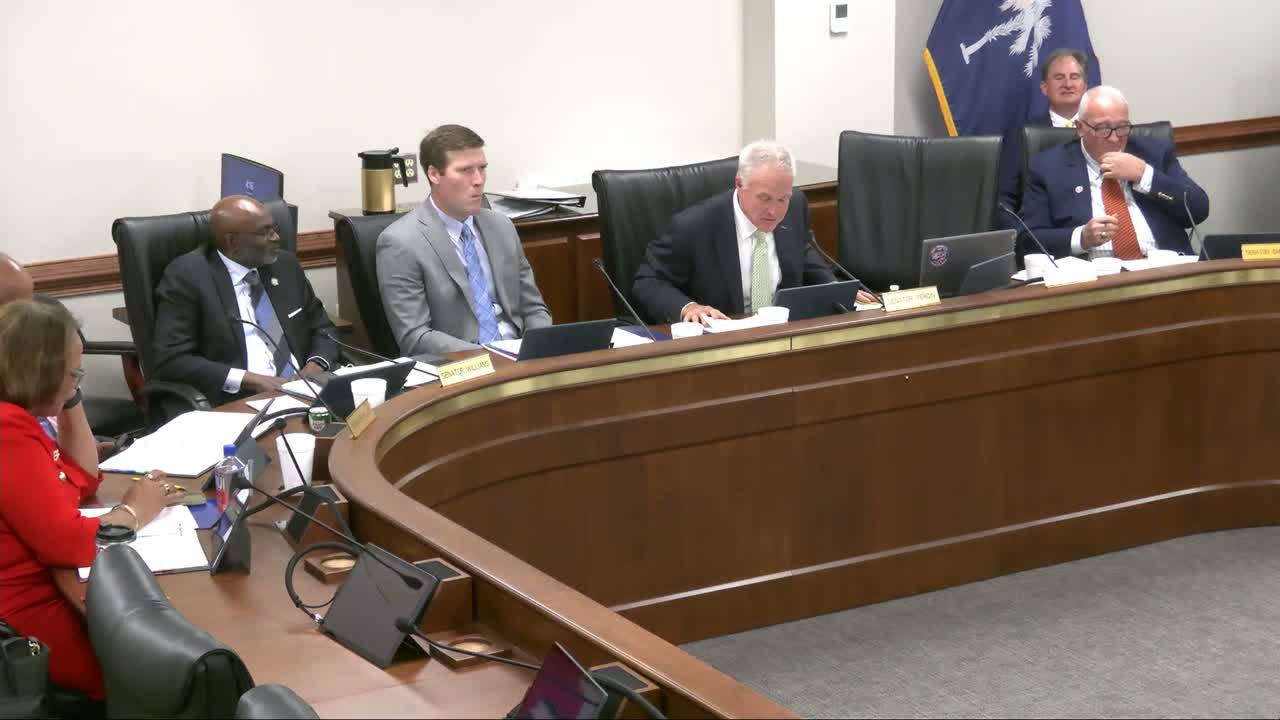
Senate panel backs bills setting minimum qualifications for county treasurers and auditors
Summary
The committee advanced S.97 and S.98, which set degree/experience requirements, a 40‑hour training expectation, and grandfathering for current officeholders; panel struck one subsection, corrected dates to 2026, and assigned training to the Department of Revenue.
The committee reviewed two companion bills, S.97 (county treasurer qualifications) and S.98 (county auditor qualifications), and approved amendments sending both to the full committee with a favorable report.
Mr. O'Donnell (speaker 6) summarized the bills: they would require that persons first elected or first appointed to serve as county treasurer or county auditor be U.S. and South Carolina citizens, a qualified elector of the applicable county, and hold either a four‑year bachelor’s degree in accounting, finance, business administration or economics or have at least four years of specified relevant experience. The language added a 40‑hour training requirement for new treasurers, grandfathered existing elected or appointed officials through 11/01/2026, and directed that Department of Revenue would run the training program.
Senator Collin (speaker 7), who introduced the measures, said she filed the bills after a county payroll problem highlighted gaps in qualifications and bookkeeping. Representatives of county officials and associations supported the bills as a means to reduce errors and provide consistent training. Committee members asked clarifying questions about whether appointed officials in Greenwood and York counties would be covered; the committee struck subsection c to remove an ambiguous cross‑reference and corrected the dates to 2026.
Without objection, the committee adopted the amendment language and voted by voice for a favorable report to the full committee. The record shows a voice vote; the transcript does not record a roll‑call tally.
The bills now move to the full committee.