
House debate spotlights concerns over uniform grading policy and local control
Get AI-powered insights, summaries, and transcripts
Subscribe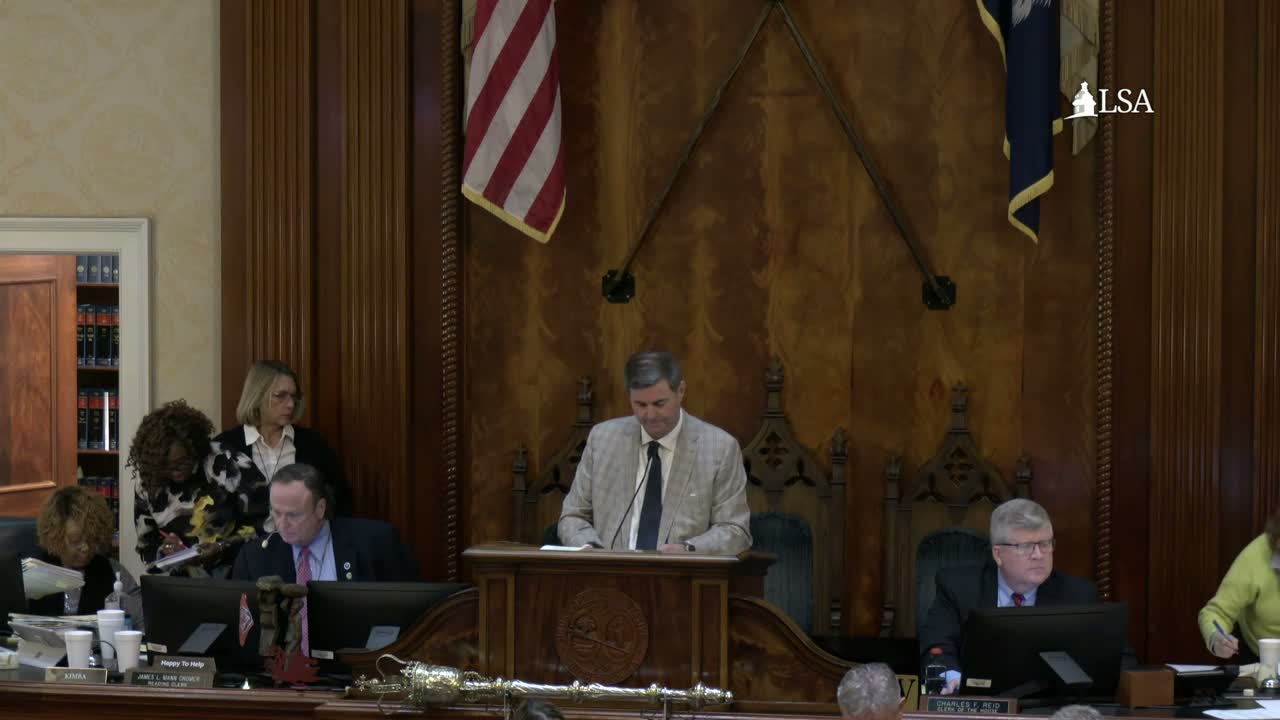
Summary
A committee-drafted revision to the state's uniform grading policy that would eliminate mandated grading 'floors' (such as automatic 50s) drew extended questioning about impacts on students, local control and enforcement mechanisms; supporters said teachers requested the change and that districts may face consequences if they deliberately diverge from state policy.
House Education Chair Representative Erickson outlined committee amendments to House Bill 50 73 that would change uniform grading rules for public schools and require institutions of higher education to update campus-safety mapping at least once every two years. "If a child gets a 30, they get a 30, but there's no 50 in the mix," Erickson said, describing the intent to report actual student achievement rather than artificially elevated grades.
Members pressed for specifics about student protections and remedies. Coach Hayes asked whether teachers would be required to provide makeup work or additional seat time; Erickson replied teachers retain classroom options — extra credit, reteaching and retesting — and emphasized the bill is a teacher-requested measure designed to restore teacher discretion.
Representative Govan raised concerns about enforcement and potential penalties, asking whether districts that decline to follow the state policy could face funding consequences. "So in essence then, we basically are saying do it the way we're telling you to do it or else," Govan said, expressing worry about fiscal penalties for local districts and the downstream effects on students. Erickson responded that penalties would arise only if a district deliberately passed a policy to diverge from state requirements and that any funding adjustments would be tied to standard enforcement mechanisms.
Supporters noted letters of support from the Palmetto State Teachers Association and the South Carolina Education Association; opponents and some members urged additional safeguards for vulnerable students and more clarity on enforcement. Several members requested debate and moved the bill to the contested calendar for further consideration.