Get Full Government Meeting Transcripts, Videos, & Alerts Forever!
Get email alerts on the Dune Protection topic
No spam. Unsubscribe anytime.
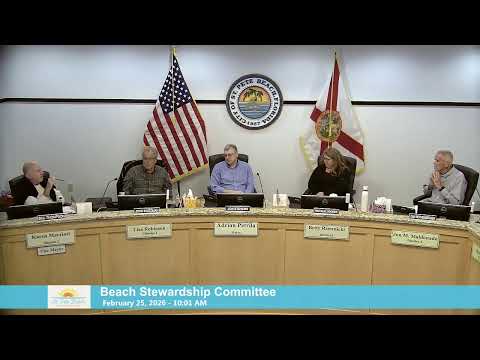
Advisory group weighs sand fencing and dune restoration to protect dunes and sea turtles
Summary
Members proposed slatted sand fencing and dune restoration measures to protect infrastructure and nesting turtles, citing DEP guidelines and asking staff to explore sand fencing and rope‑and‑post options that minimize light intrusion for nesting sea turtles.
Members of the Beach Stewardship advisory group discussed dune restoration techniques and turtle protections as part of a broader set of beach stewardship priorities.
Vice Chair Kurzman recommended using slatted sand fencing — a low, porous fence of alternating slats — to encourage sand deposition and to clearly delineate dune areas without creating an impenetrable barrier. "In a lot of places you go at the beach, they have those slatted fences... it's according to the research that says this is what you should do," Kurzman said, and suggested a second, low barrier landward of nests to help reduce light intrusion on hatchlings.
Staff and other members referenced Florida Department of Environmental Protection guidance, noting both rope‑and‑post fences and sand fencing are used for dune protection and that DEP sets permitting standards (including Coastal Construction Control Line rules). The chair said: "Dunes are infrastructure. They are the seawall of the West for us, and the more we can keep the water out, the less flooding we will have." The group also discussed how fencing choice should avoid trapping adult turtles or their hatchlings.
Why it matters: Members emphasized dunes as protective infrastructure and urged the city to combine planting (sea oats and native dune species), sand fencing and rope‑and‑post approaches where appropriate. Staff noted dune planting and dune walkover replacement projects already underway on multiple avenues and agreed to include DEP guidance and construction details in the materials they will circulate.
Next steps: The committee asked staff to research DEP permit requirements and best practices, to explore grant opportunities for dune planting (Pinellas County involvement was mentioned) and to bring samples or specifications for slatted sand fencing to a future meeting.