Get Full Government Meeting Transcripts, Videos, & Alerts Forever!
Get email alerts on the Police Accountability topic
No spam. Unsubscribe anytime.
Arapahoe DA outlines CERT process for officer-involved shootings
Summary
Arapahoe County District Attorney Amy Patton told the Aurora City Council study session that the CERT team—an independent, multi-agency investigative body—collects evidence after officer-involved shootings and presents it to the DA’s office, which alone decides whether to file criminal charges.
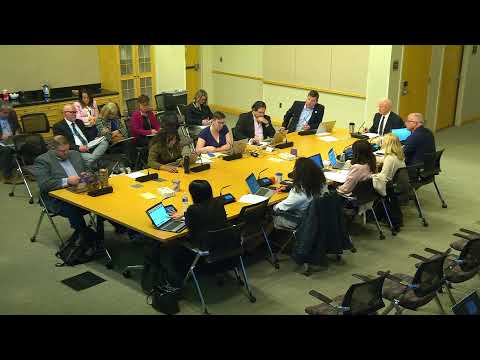
District Attorney Amy Patton of the 18th Judicial District described the Critical Incident Response Team (CERT) process to the Aurora City Council on Feb. 23, saying CERT provides an independent, multi-agency investigation when a law enforcement officer’s use of force results in serious injury or death.
Patton said CERT investigators—drawn from multiple law enforcement agencies and her office—respond immediately to critical incidents to collect evidence, review body-worn camera footage and interview witnesses. “We respond right away,” she said. “Attorneys from my office will come, investigators, and then other members of the search team,” and investigators begin reviewing evidence at the scene.
The DA emphasized separation between the employing agency and the lead investigator: when Aurora Police Department is the employer of the involved officer, another agency (for example, the sheriff’s office or Littleton Police) typically leads the CERT investigation so the employing agency does not investigate itself. Patton said CERT’s role is to collect facts and present them to her office; CERT does not itself make charging decisions or evaluate department policy.
Patton explained the DA’s office then reviews the CERT presentation, including raw evidence such as body-worn camera footage and witness interviews, and makes the final charging decision. She said if the office chooses not to file charges it publishes a detailed explanatory letter on its website describing the factual basis for that decision.
Council members asked practical questions about witness outreach and grand-jury use. Patton said CERT commonly interviews witnesses at the scene and follows up if a witness initially declines; if a witness refuses to cooperate and their testimony is important, the DA’s office may use grand-jury subpoenas in rare cases. “We use the grand jury pretty rarely in Colorado,” she said, adding the grand jury can subpoena documents or compel testimony when needed.
Patton also noted that CERT investigators may include forensic experts and that officer interviews are typically conducted by CERT investigators; such interviews are usually voluntary but can become formal. She stressed the team’s purpose is to promote independent, thorough, and transparent investigations and to preserve community trust by separating investigative duties from the employer agency.
The presentation concluded after council members pressed for clarifications about thresholds for “serious bodily injury” and how the process is triggered; Patton said statutory definitions and on-call alerts prompt CERT responses, and that her office posts protocols and detailed case letters on its website for public review.
The council thanked Patton for the presentation; no formal actions were taken related to the CERT briefing during the study session.