
AARP, business groups and conservationists press Senate subcommittee for stricter data center rules on rates, transparency and siting
Get AI-powered insights, summaries, and transcripts
Subscribe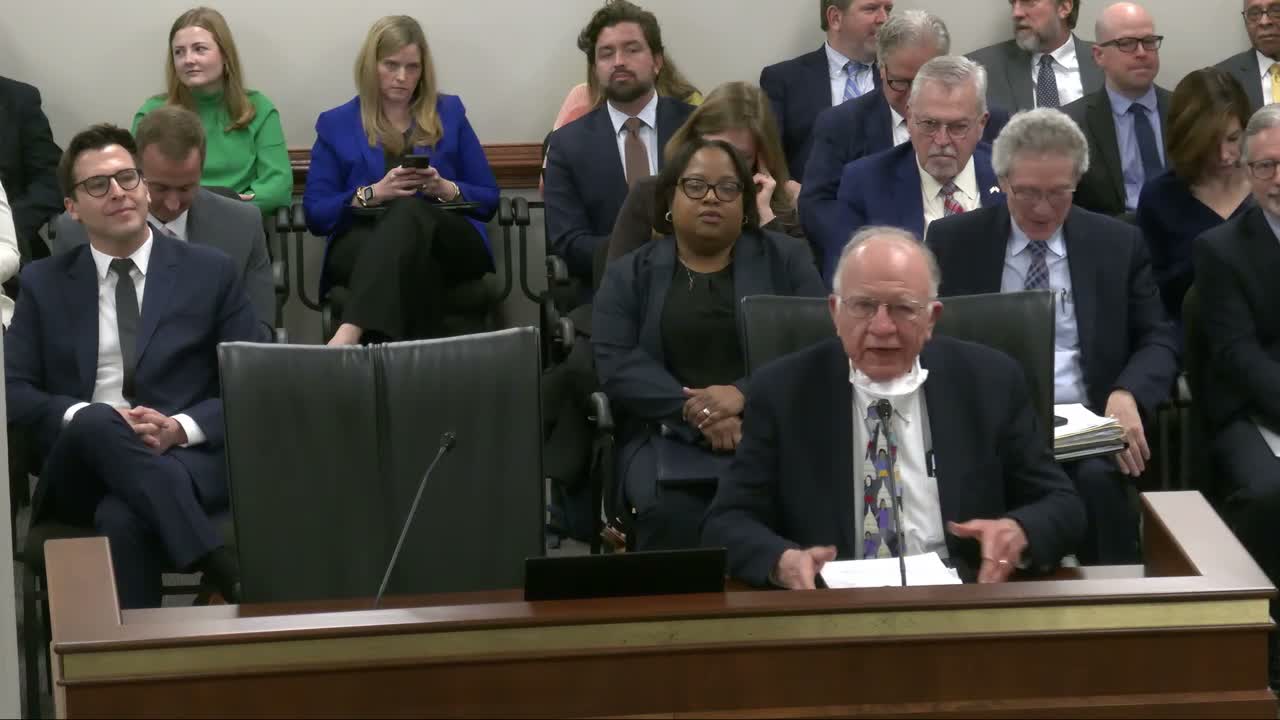
Summary
Multiple witnesses urged changes to S.867 including clearer cost-allocation and long-term contract rules to prevent shifting generation costs to residential customers, stronger FOIA protections for public oversight, uniform applicability to cooperatives, and tighter reporting and decommissioning rules for environmental protection.
Representatives of consumer, business and conservation groups told a Senate subcommittee on Wednesday that proposed data center regulations in S.867 need clearer rules on rate allocation, stronger transparency protections and uniform applicability across utility territories.
John Roof, speaking for AARP, warned that without explicit statutory direction on cost allocation and contract approval the costs of new generation and transmission tied to large data center loads could be passed to residential ratepayers. "The legislation should direct the PSC to adopt clear enforceable standards for cost allocation and contract approval with opportunities for public input and review," he said.
Frank Knapp of the South Carolina Small Business Chamber of Commerce told senators that long-term electricity contracts or on-site generation should be statutory requirements to prevent consumers from subsidizing data center energy needs. He urged that any protections apply to all utilities, including electric cooperatives.
Multiple witnesses, including a representative from the South Carolina Press Association, urged the committee to preserve public-records oversight. Taylor Smith recommended narrowing any new statutory confidentiality carve-outs and using discretionary language so the Freedom of Information Act keeps its existing public-access safeguards.
Jeremy Ward, Chester County planning and development director, told the panel that many counties already regulate large sites and recommended that the state avoid creating a duplicative permitting office. "Local planning staff are the experts on the ground," he told the subcommittee, urging the committee to consider encouraging or funding model ordinances rather than imposing a single state permit regime.
Conservation and community groups recommended stronger reporting requirements for both water and energy use, suggested re-inserting language to limit state incentives for new data centers, and asked for clear decommissioning standards to address large concrete foundations and impervious surfaces left if sites are abandoned.
The Department of Environmental Services said it could comply with proposed water and wastewater permitting requirements and offered to return with agency studies on public-health, air and noise impacts if the committee requested them. No votes were taken; the committee scheduled further hearings, including testimony from utilities on energy and rate impacts.
The subcommittee did not adopt final changes to S.867 during this session and asked witnesses to submit written materials and suggested language to staff for possible amendments.