
Senate finance panel presses administration on $2.07 billion rural health plan, seeks project-level detail
Get AI-powered insights, summaries, and transcripts
Subscribe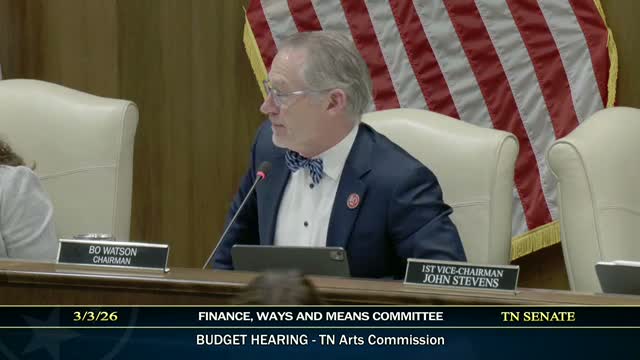
Summary
Senate Finance lawmakers probed the administration’s $2.07 billion Rural Health Transformation proposal tied to federal ARPA/CMS funding, asking for itemized projects, metrics and legal changes required to secure future funds; members warned parts of the package could put federal money at risk if statutory changes do not pass.
Chairman Watson pressed administration officials on March 2 for precise, project-level details about the administration’s $2.07 billion Rural Health Transformation proposal, saying the legislature needs to know "what we're spending the money for." The committee reserved further substantive review for a follow-up meeting next week.
The administration framed the proposal as a five-goal plan that depends in part on statutory and regulatory changes. Michael Hendricks, the governor’s policy director, said the plan pairs targeted investments with policy changes CMS wants states to adopt and that the federal program is competitive. "This is not funds to just pay the bills or keep the lights on," Hendricks said. He added that the plan was intended both to "transform" rural health and to make Tennessee competitive for additional federal dollars.
Committee members asked repeated questions about oversight, sustainability and risk. Chairman Watson noted that the state already received $206.9 million and that some additional future dollars were contingent on policy metrics: "These are the terms for the money," he said, pressing officials to quantify how much could be clawed back if certain bills do not pass. Administration staff told the committee they had direct guidance from CMS and that an initial baseline of roughly $18.7 million over five years represented a conservative floor, but that the exact future allocation was "unknowable" and competitive.
Members sought an itemized list of projects and district impacts. The administration said rural health awards so far have supported roughly 110 projects and that each of Tennessee’s 89 rural counties has been touched by at least one award; officials offered to supply a county-by-county inventory and the community health assessments that informed prioritization. "There's a spot on the TDH website where communities have gone through... and here's our action plan," an administration official said when asked about transparency of local plans.
Lawmakers pressed on the legislative components linked to the application—items such as certificate-of-need reform, scope-of-practice changes for clinicians, and SNAP-related measures. Leader Johnson and others stressed the intent is to "build on" existing state policy rather than supplant it, but senators highlighted the political sensitivity of scope and licensing bills. Several members also asked whether the state should factor the possibility of federal clawbacks into its budget planning and whether the General Assembly should pre-decide which elements it will not support.
Why it matters: The panel’s decisions could affect both how much federal rural health funding Tennessee receives in later years and whether the state must return funds already awarded if policy conditions are not met. Members repeatedly emphasized accountability, asking for measurable targets and reporting mechanisms.
What’s next: The committee will reconvene next week to drill into individual initiatives and annual funding levels. Administration officials promised to provide detailed project lists, performance metrics and the public links to the community health assessments that informed the application.
Votes at a glance: The committee completed its legislative calendar before beginning this presentation; multiple bills were recommended for passage to the calendar committee during the same meeting (see the committee’s line-item votes compiled in a separate committee report).