
Senate committee advances bill to withhold officer names in certain records after tense debate on transparency
Get AI-powered insights, summaries, and transcripts
Subscribe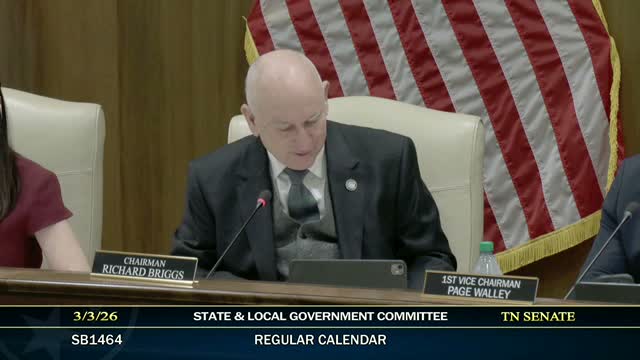
Summary
A bill to create uniform confidentiality rules for officers’ names and sensitive operational details passed the Senate State and Local Government Committee after contentious debate about transparency and safety; sponsor said social media changes risks to officers, opponents warned of reduced accountability.
Leader Johnson introduced Senate Bill 14-64 on March 3, saying the measure would require state and local entities to withhold an officer’s name when paired with personally identifying information and protect details of high‑risk or undercover operations and some immigration enforcement tactics.
"By clarifying both what must remain confidential and when disclosure is appropriate, this bill will reduce ambiguity for records custodians and support consistent handling of public records requests," Leader Johnson told the committee. He emphasized the protections would not create new criminal immunity and said the measure was crafted with stakeholder input.
Senator Yarbrough pushed back, saying the state has longstanding norms of transparency for officers who are accountable to the public. "Most police officers walk around with badges that actually have their numbers. They have, oftentimes, their names because they are responsible to citizens," Yarbrough said, warning that shielding names risks concealing misconduct. Other members echoed concerns about limiting public oversight.
Johnson replied that social media now lets anyone widely distribute personal identifying information, creating safety risks for officers and their families. "Any individual out there with a phone can capture information, can broadcast it on social media, and potentially endanger...home addresses, names, addresses, family members," he said, arguing the bill is designed to balance safety and necessary disclosure under federal law or court order.
After debate and adoption of the amendment that 'makes the bill,' the committee approved SB 14-64 as amended by roll call (6 ayes, 2 nos) and moved the bill to the Senate calendar.
The hearing record shows the committee wrestled with the tradeoff between officer safety and transparency; no final text changes beyond the adopted amendment were resolved in public argument, and the bill will proceed to further floor consideration.