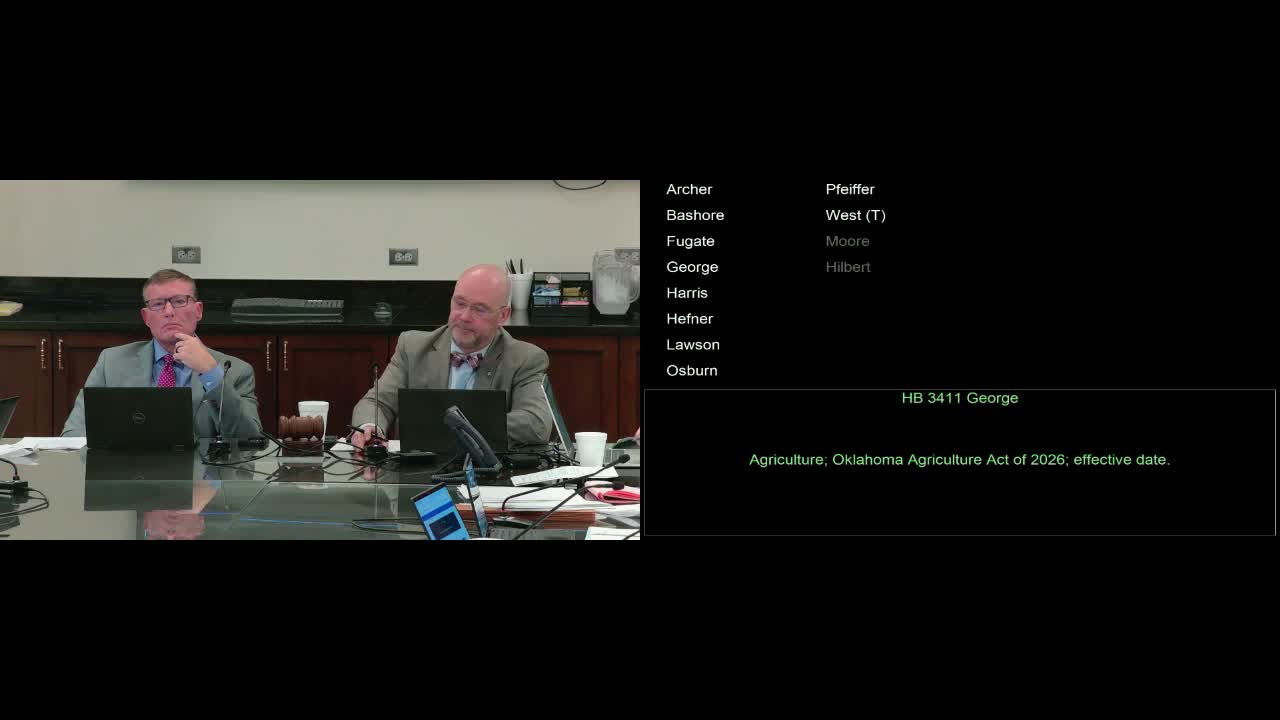
Committee moves bill to test biosolids for PFAS before land application, authorize pilot treatments
Loading...
Summary
House Bill 3411 would require DEQ or accredited labs to test biosolids for PFAS before land application, provide results to farmers and authorize pilot treatment methods pending companion funding; members asked about pharmaceuticals and companion appropriations.
Representative George presented House Bill 3411 as part of a multi-year effort to address concerns about biosolids and PFAS contamination, saying the bill requires testing prior to land application and would inform farmers of results.
"Prior to land application, a sample of the biosolids must be DEQ or laboratory appropriately accredited," Representative George said, comparing test-result labels to fertilizer ingredient lists so farmers know what they are receiving.
The bill directs the Department of Environmental Quality to acquire equipment to test for PFAS (contingent on a companion appropriations bill) and authorizes DEQ to approve treatment protocols such as supercritical water oxidation where appropriate.
Representative Fugate asked whether the testing could include pharmaceutical residues such as antibiotics; George said he would consult DEQ and consider adding such tests if appropriate. Members also noted the companion bills that would provide DEQ funding and a five-year pilot with the state university.
Committee members recorded a roll call in favor (recorded in the transcript as 9-1) and reported the bill as due passed. Members said a small number of floor amendments remain and that DEQ would be responsible for implementation details.
What happens next: HB 3411 was reported out of committee pending companion appropriations; DEQ implementation and any testing scope (PFAS only or additional analytes) will be determined in subsequent agency rulemaking or guidance.