Get Full Government Meeting Transcripts, Videos, & Alerts Forever!
Get email alerts on the Wind Energy Ordinance topic
No spam. Unsubscribe anytime.
Des Moines County residents press supervisors to rewrite wind-turbine rules; call for moratorium and larger setbacks
Summary
At a May 20 public comment session, dozens of Des Moines County residents urged supervisors to reopen the county's commercial wind ordinance, seek a moratorium and increase setback distances after developers filed locations for turbines up to 750 feet. Speakers cited easement terms, roads, wildlife, aviation safety and health concerns; proponents emphasized jobs and tax revenue.
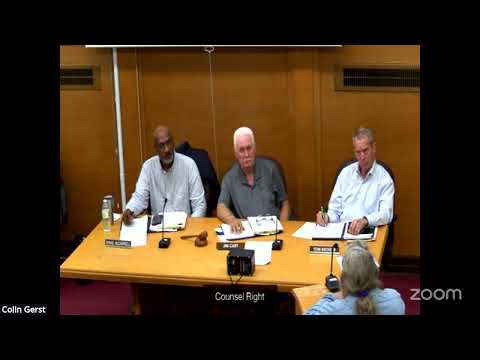
Des Moines County supervisors heard more than three hours of public comment on May 20 as dozens of residents and stakeholders weighed in on a proposed commercial wind-energy development spanning northwest portions of the county.
Speakers opposing the project pressed the board to open the county's Commercial Wind Energy Conversion Systems ordinance for revision or to impose a temporary moratorium so residents can fully evaluate setbacks, easement language and community impacts. "If it goes like the ordinance is presently written, I'm afraid that the landscape and the intended usage of Des Moines County land is in a very negative light," said Dwight Mulch, a Burlington resident who said he worries about property values and the visual impact.
Multiple speakers described standard contract language they said landowners had signed with developers, including what one resident called a "nonexclusive, perpetual and irrevocable" nuisance easement that they said waives future claims for noise, light, vibration or other effects. "Who'd sign that?" Cindy Newberry asked while reading contract text she provided to supervisors; she said some clauses appear to release the company and bind heirs and successors for decades.
Public commenters focused on several recurring, concrete issues: the proposed turbine height (speakers said developers filed coordinates for machines up to 750 feet above ground level), the county's current setback distances (speakers noted the ordinance sets 1,800 feet from an occupied dwelling and roughly 800 feet from property lines), and safety and liability for construction impacts to private lanes and gravel roads. "The closest parcel with a signed lease agreement is just a half mile from our home," said Lisonbee Moore, who recommended adding drainage protections to the county road-use agreement and requiring an escrow fund for damage repairs.
A cluster of public-safety and operational concerns came from aviation and emergency-response speakers. Clifford Baker, an airport manager, said tall turbines create radar clutter and can complicate crop-dusting and visual-flight operations; John Martin, a helicopter pilot with long air-medical experience, warned that 750-foot towers can reduce usable medevac flight corridors and lengthen response times. "If we have to fly higher because of these obstacles, it affects the golden hour for critical patients," Martin said.
Speakers also raised wildlife and health questions. Several residents cited studies and anecdotes they associated with so-called "wind turbine syndrome," alleging sleep disturbance and other symptoms at distances of miles. Others warned of impacts to migratory birds and bats along the Mississippi Flyway and cited state protections for threatened species. Rose Fisher, who displayed county GIS maps and FAA filings, said the FAA had accepted filing coordinates for dozens of turbine locations and noted the FAA had not flagged the sites as hazards to air navigation.
Not every speaker opposed the project. Supporters said wind development can provide local property payments, infrastructure upgrades and jobs. David Hazen, a landowner who leased ground to a neighboring project, said modern turbines can be quieter than older models and estimated a potential annual property-tax contribution of as much as $1,000,000 to Des Moines County schools. A union representative urged supervisors to consider local labor and grid-capacity benefits and recommended negotiating mitigations with developers rather than imposing blanket bans.
No formal motions or votes were recorded during the session; supervisors limited their remarks and emphasized they were collecting information to inform any future ordinance changes. Several commenters urged clear, enforceable changes if the county decides to allow projects: measure setbacks from property lines rather than dwellings, require escrow accounts for road repairs and emergency costs, mandate fire-suppression/lightning-arrest systems, and clarify who would pay for tower-related crop or property damage.
The county did not announce any immediate action after the hearing. The supervisors' stated next steps were to compile the public input and consider ordinance revisions that would address the recurring concerns raised at the meeting.