
Sen. Wiesenberg, repair shops press insurers to justify safety-related denials in SF2209 hearing
Get AI-powered insights, summaries, and transcripts
Subscribe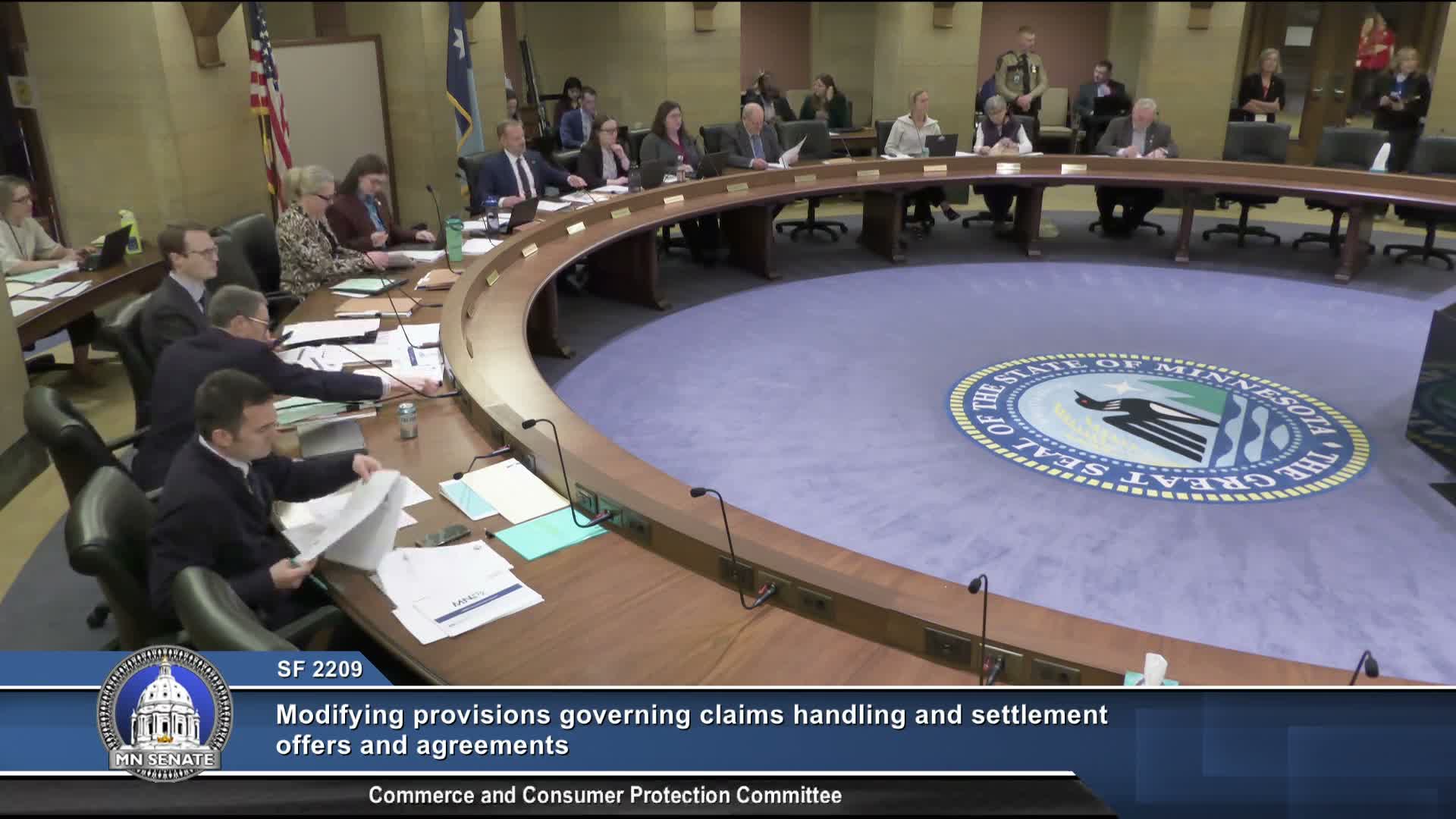
Summary
Senate Commerce heard testimony on SF2209 addressing insurance denials of manufacturer-required repairs, with shop owners urging written explanations and insurers warning the bill could raise premiums and litigation. The committee laid the bill over for further work.
Senator Wiesenberg introduced Senate File 2209, saying constituents and small body shops told him insurers were not paying for all repair services and recounting a personal collision that left him out-of-pocket for repairs.
In testimony, Sarah Cech of Cech Auto Body told the committee that insurers frequently deny safety-related repairs without providing written reasons, leaving shops and customers with delayed repairs and potential safety liabilities. "You can't pay for half the repair and expect a whole safe vehicle," Cech said, urging the committee to require insurers to provide written denials for safety concerns and to clarify existing statute 13 22.
Linden Wickland, executive director of the Alliance of Automotive Service Providers of Minnesota, said shops increasingly face delays and automated estimate reductions: "AI scrubbers are coming in, chopping up the initial estimate," she said, adding that written notice to consumers would improve transparency.
Josh Shaw, GM and COO of Shannon's Auto Body, gave case examples of long waits for approvals — one customer waited 71 days — and said insurers refused to put denials in writing. Shaw said SF2209 would establish reasonable timelines and require explanations for denied repair operations.
Aaron Cocking, president and CEO of the Insurance Federation of Minnesota, testified in strong opposition, arguing the bill would remove insurers' ability to evaluate cost reasonableness, create a private right of action for noncontractors, invite inflated billing and litigation, and ultimately raise premiums. "By removing an insurer's ability to evaluate cost reasonableness and negotiate fair pricing, the bill effectively requires payment of whatever a repair facility chooses to charge," he said.
Committee members acknowledged problems with delays and repetitive information requests but differed on statutory fixes and fraud safeguards. Chair Klein said the bill gave the committee a chance to explore the issue; the committee laid SF2209 over for further consideration.
What happens next: SF2209 was laid over so proponents, insurers and staff can work on clarifying definitions, timelines and fraud guardrails before the committee considers further action.