
House passes higher‑education changes that limit out‑of‑state seats at preeminent universities
Get AI-powered insights, summaries, and transcripts
Subscribe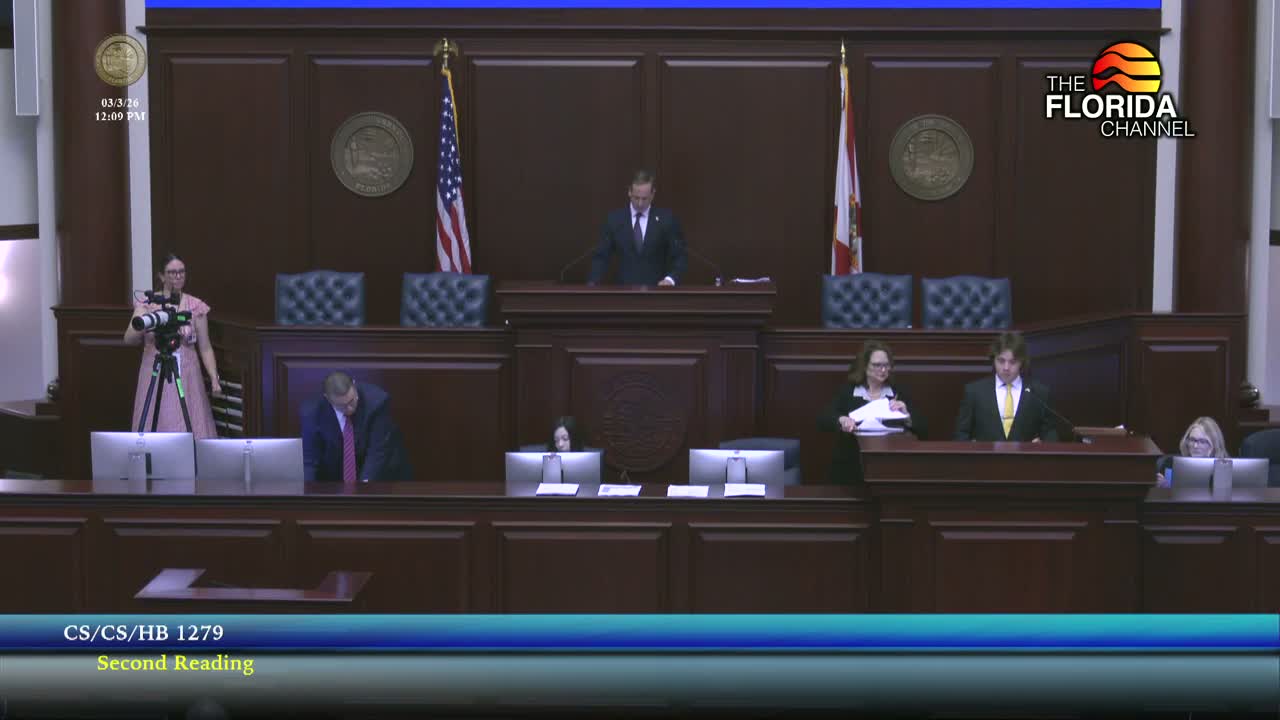
Summary
CS/CS/HB 1279 won House approval after a heated floor debate. The bill restricts required courses' DEI content, revises admissions priorities to favor Florida residents for first‑time college students, and caps students from a single foreign country within nonresident enrollments; critics warned of budget and diversity impacts. (84–25)
The House approved CS/CS/HB 1279, a package of higher‑education changes that sponsors say strengthen oversight and prioritize Florida residents at the state’s preeminent universities.
Representative King Carl Johnson, the bill sponsor, said the measure aims to expand opportunity for Florida students and to update statutes and reporting to match federal Title IX standards. "Expanding opportunity for them does not lower standards, it reinforces them," King Carl Johnson said in closing.
A major floor dispute centered on a provision that would require preeminent universities to maintain a high ratio of first‑time‑in‑college enrollees who are Florida residents (the bill directs a 95% target for first‑time in college enrollment made up of Florida residents). Opponents warned the change could reduce out‑of‑state and international tuition revenue, potentially pressuring institutions' budgets and research capabilities. Representative Gant led an amendment effort to remove the 95% requirement on those grounds; the amendment failed on the floor.
Lawmakers also debated a 5% per‑country cap on nonresident international students in the undergraduate population and changes that limit generically required DEI coursework for graduation rather than limited gen‑ed courses. Sponsors argued the changes preserve Florida students’ seats and protect academic standards; opponents said the measures could constrain institutional competitiveness and broaden budgetary risk.
After extended debate and a roll call, the House passed the bill 84–25. Sponsors said implementation will be phased and that follow‑up guidance from the Board of Governors and university leaders will be needed.