
House passes 'Fire Act' to curb foreign influence; amendment bans some surrogacy contracts
Get AI-powered insights, summaries, and transcripts
Subscribe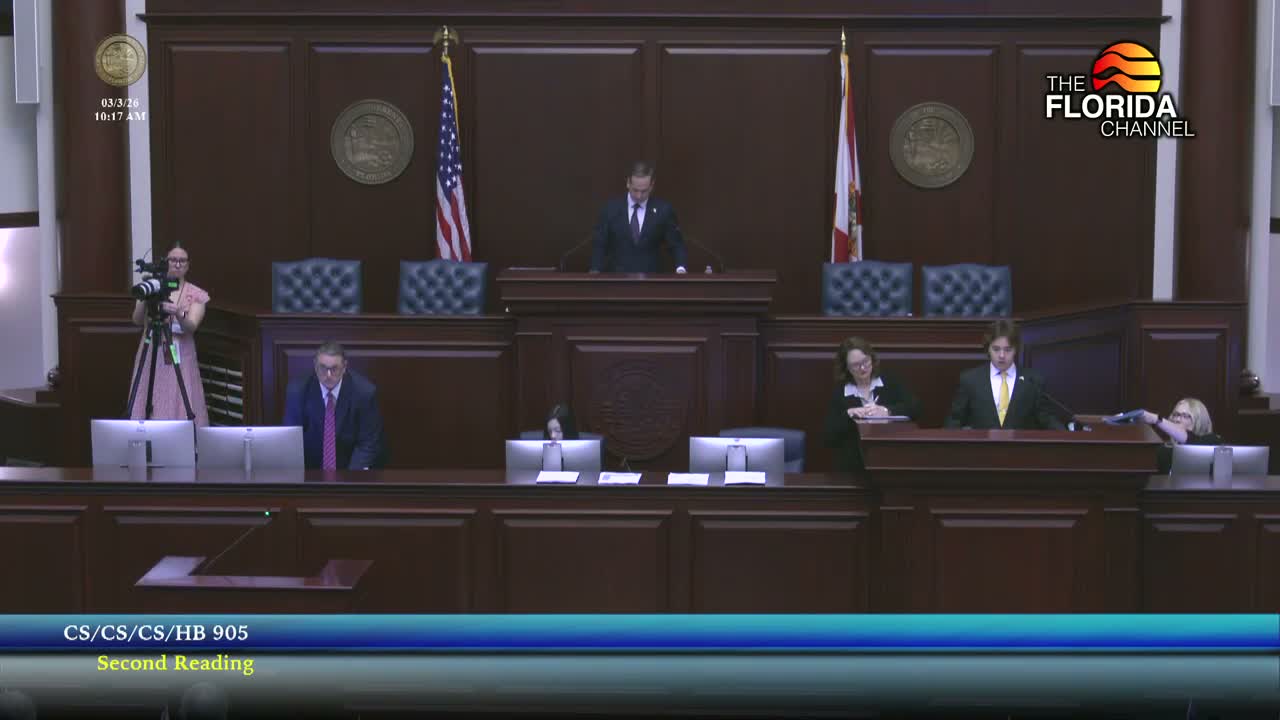
Summary
The Florida House approved CS/CS/CS/HB 905, the so‑called 'Fire Act,' creating new registration and procurement limits tied to foreign countries of concern and adopting an amendment that invalidates some surrogacy contracts involving those countries. Sponsors said the measure protects infrastructure and public officials; critics warned of scope and implementation questions. (86–20)
The Florida House on Wednesday passed CS/CS/CS/HB 905, a package of measures aimed at limiting foreign influence on state government, curbing certain procurement ties to designated countries of concern and tightening restrictions on cultural agreements. Representative Persons Mullica, the bill sponsor, told colleagues the measure requires registration by agents tied to foreign countries of concern, bans certain gifts and authorizes limited state oversight of information‑technology contracts that could be remotely accessed or controlled.
"The Fire Act stands for the people of Florida," Representative Persons Mullica said, urging members to vote for what she called a comprehensive package to protect infrastructure and deter influence operations. She described provisions that repeal elements of the state’s former China Linkage Institute law and that would terminate certain sister‑city agreements with countries of concern as of July 1, 2026.
Debate on the floor focused in part on procurement and enforcement. Representative Persis Molica asked whether local governments and state agencies would be able to identify vendors with prohibited ties; Persons Mullica said the bill requires an affidavit from vendors and authorizes the Department of Management Services to publish non‑exhaustive guidance. Representative Eskamani raised concerns about the bill’s definitions and whether organizations could be labeled politically rather than based on evidence; the sponsor pointed to existing federal designations and an appeals process built into the measure.
Lawmakers also approved a contentious amendment expanding the bill to cover certain surrogacy and preplanned‑adoption agreements. That amendment makes surrogacy contracts invalid in Florida if any party to the contract — whether surrogate, intended mother or intended father — is a citizen or resident of a foreign country of concern. Supporters argued the change prevents exploitation; opponents warned it could have unintended consequences for families and urged further vetting by reproductive‑health experts.
After structured debate and votes on amendments, the House recorded a final tally of 86 yeas and 20 nays to pass the measure. The bill now moves to the Senate for consideration.
The House debate centered on national security and procurement safeguards, while sponsors said follow‑up rulemaking and guidance will be needed to operationalize vendor affidavits and the appeals process.