
Senate backs bill to expand EV access, allows limited direct sales under dealer deal
Get AI-powered insights, summaries, and transcripts
Subscribe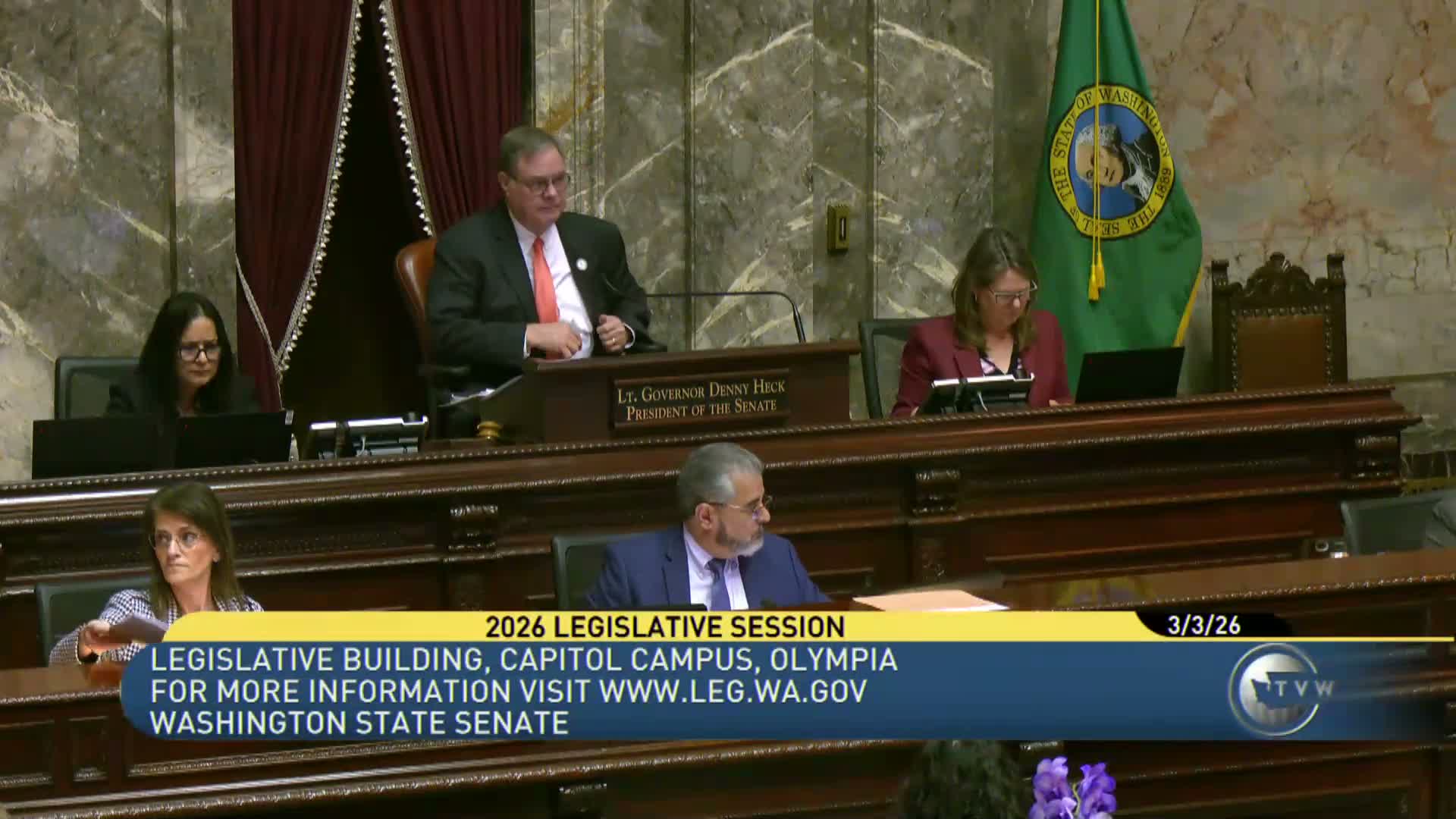
Summary
The Senate passed Engrossed Substitute Senate Bill 6354, enabling limited direct sales by manufacturers such as Rivian and Lucid under negotiated terms with dealers to expand access to electric vehicles; senators highlighted greenhouse gas reductions but also raised consumer-protection and service-access concerns. The measure passed by roll call (46 ayes, 3 nays).
The Washington State Senate on March 2 approved Engrossed Substitute Senate Bill 6354, a measure aimed at expanding access to electric vehicles by allowing certain manufacturers limited direct sales under negotiated agreements that protect dealer networks. The final roll call recorded 46 ayes and 3 nays, and the bill was declared passed.
Sponsor remarks framed the bill as a compromise that balances consumer access and local economic concerns. "This is a balanced way forward," Senator Lias said on the floor, describing agreements reached with manufacturers and auto dealers to allow consumer access while preserving local dealer networks. Supporters emphasized the state's need to reduce transportation-sector greenhouse-gas emissions and noted that direct sales could increase electric vehicle uptake.
Several senators expressed reservations about consumer protections and post-sale service. Senator Stanford said she supported the approach but warned that "access to service is a real concern" for buyers who may face long distances for repairs or limited service options under a direct-sales model. Senator Harris and others urged clear disclosure so buyers understand differences in service and warranty pathways.
Floor debate referenced negotiations involving Rivian and Lucid and stressed the importance of preserving local dealer roles—tax revenue, service capacity and community ties were cited repeatedly. Proponents and opponents characterized the enacted language as a negotiated compromise intended to protect consumers and dealers while increasing consumer choice.
With the Senate's passage, the bill will move to the next procedural step toward enrollment and transmittal to the other chamber; supporters and stakeholders flagged the need for monitoring service access and consumer protections during implementation.