Get Full Government Meeting Transcripts, Videos, & Alerts Forever!
Get email alerts on the Education Lgbtq Support topic
No spam. Unsubscribe anytime.
Bellevue School District staff receive training on supporting LGBTQ students
Summary
Counselors and student-support staff attended a 9 a.m. training that laid out four research-backed supports for LGBTQ students, practical skills (empathy, pronouns, visible signs of safety) and local referrals including Trevor Project and Lambert House.
Bellevue School District counselors and other student-support staff attended a training session at 9 a.m. that presented research-backed strategies and local referral options for supporting LGBTQ students, presenters said.
Justin Degnoltz, a clinical supervisor with UCEDD services, and Giselle, a youth and family therapist at YES and coordinator of the Be GLAAD queer youth group, led the session. Degnoltz said much of the material draws on GLSEN research and emphasized that supportive adult relationships can be life‑saving for young people. "You literally are saving lives already," he told attendees.
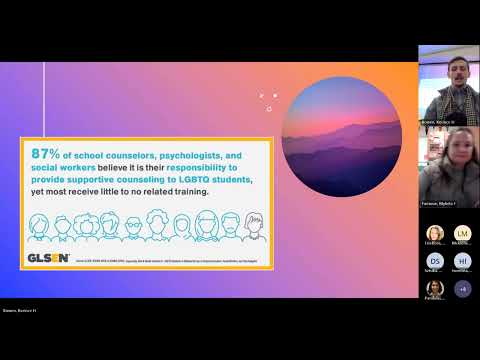
The presenters framed their guidance around four supports identified in research: supportive educators, student-led clubs such as GSAs, comprehensive district and state policies, and inclusive curriculum. Degnoltz said supportive educators should build trust, affirm identities and, where appropriate, advocate with administrators. He told staff that about "87% of school counselors, psychologists, [and] social workers" consider supporting LGBTQ students part of their responsibility.
On student clubs, presenters advised staff to help students form or sustain GSAs where appropriate and to use available toolkits — noting that elementary options differ from middle and high school programs. Giselle said peer-run groups increase visibility and provide critical social support, and urged staff to consider serving as advisors where needed.
Degnoltz discussed district and state policy as a structural support and cited guidance from OSPI, while warning of "rollbacks" occurring elsewhere. He encouraged staff to advocate to keep nondiscrimination, facilities access and participation‑in‑athletics policies intact.
Presenters suggested practical, day‑to‑day practices staff can adopt: show curiosity and empathy; do not tolerate slurs or harassment; model sharing pronouns; and display visual signs of inclusion such as pride flags or pins. When students need more specialized help, presenters recommended external referrals and legal resources.
Among the referrals named were the Trevor Project (free crisis chat and support for people ages 13–24), Lambert House (programming and groups), Be GLAAD (the presenters' youth group serving roughly ages 13–19), PFLAG chapters, King County Library teen offerings, and legal support groups including Q Law, Lambda Rights Project, Lambda Legal and the ACLU. Degnoltz also mentioned local advocacy organizations such as Gender Justice League and suggested reporting hate‑bias incidents to Bellevue Police when appropriate.
Giselle highlighted how intersecting identities — such as race and gender identity — can compound stress and make school climates unsafe, saying, "It's really difficult to learn in an environment where you don't feel safe." She urged staff to avoid assumptions about students and to be curious and inclusive in interactions.
The session concluded with the moderator pausing the recording and opening the floor for questions; presenters said they would share resource links and referrals with attendees and take questions from those joining on Teams.