Get Full Government Meeting Transcripts, Videos, & Alerts Forever!
Get email alerts on the Towing Contracts topic
No spam. Unsubscribe anytime.
Tow operators urge council review after allegations of contract noncompliance
Summary
Tow companies and residents told the Amarillo City Council that the city’s sole towing contractor, T Miller Inc., has repeatedly operated without required licensure and insurance, and industry speakers urged reopening the contract or returning to a rotating roster to reduce scene time and improve safety. Council directed staff to place the towing contract on a future agenda for review.
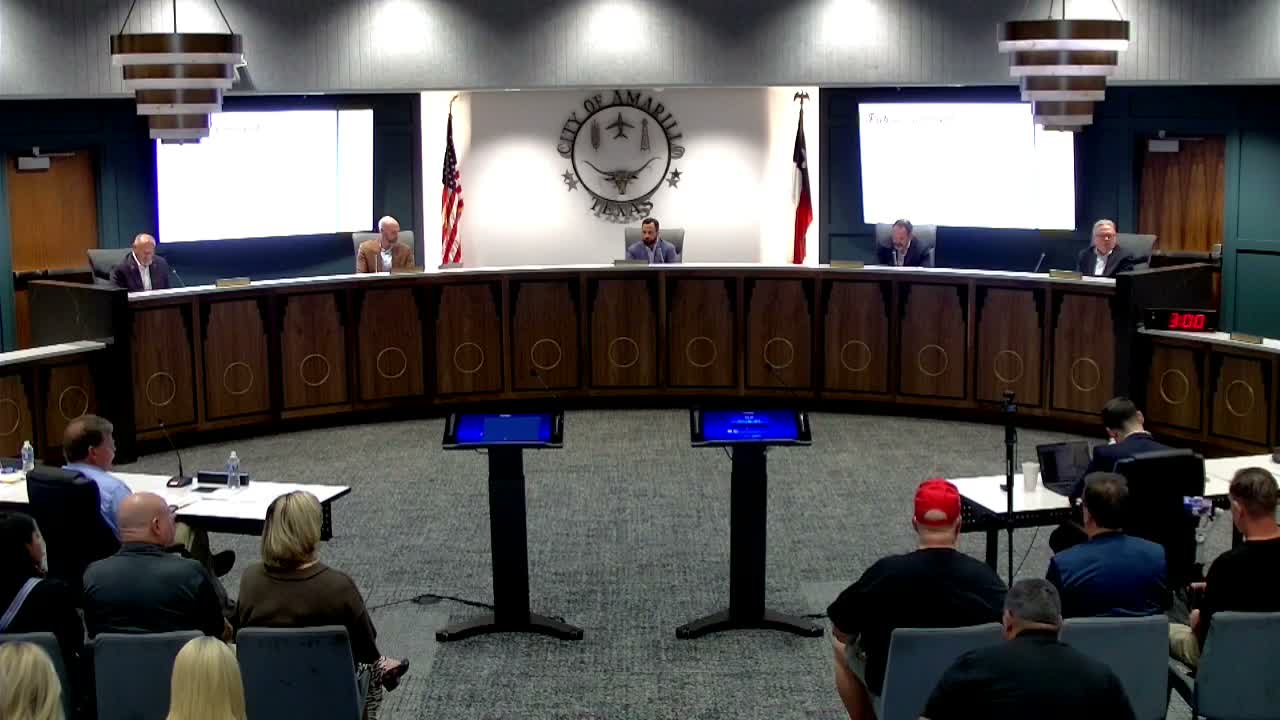
Several tow‑truck operators and residents used the council’s public‑comment period to press elected officials to investigate the city’s towing contract and to consider changes to how wreck‑clearance work is assigned.
Daniel Martinez told the council the city should “open the contract so that all licensed tow operators in the city of Amarillo have an equal chance to operate,” and he alleged T Miller Inc. had repeatedly failed to maintain a vehicle‑storage license and required insurance forms when it bid and won the city contract (public comment by Daniel Martinez). He asked the mayor and council to investigate and consider reevaluation or termination of the contract if the city finds noncompliance.
Longtime wrecker operator Robert Runquist and representatives from local companies including Sierra Towing and K3 Towing described safety risks from a single‑vendor system. Robbie Carter of Sierra Towing said no city staff appeared to monitor contract performance closely and called for the council to require access to response‑time records. K3’s Stephen Hamilton said longer times on scene raise the risk of “secondary crashes,” where responding personnel are endangered, and argued rotation among more providers would bring tow trucks to scenes faster.
City staff and councilors responded that the contract includes performance expectations and that, according to reports provided to staff, the current provider meets required arrival times in roughly 80–90% of calls on average. Councilmember Don Tipps asked whether the contract requires the contractor to call another provider if it cannot meet the time standard; staff confirmed the contract requires coverage to be provided if the incumbent cannot meet response times. The city manager said staff will bring a future agenda item to examine the towing contract and the complaint points raised in public comment.
The council did not take a binding vote on the contract at the Nov. 18 meeting, but members agreed to request a formal staff review and to place towing‑contract issues on a future meeting agenda so council can consider the concerns and possible remedies.
Ending: The council asked staff to investigate the allegations, to provide the city’s contract compliance records and performance data to the governing body, and to return with options (including whether to reopen bidding or change assignment rules) in a later meeting.