
Senate reads long list of House-passed bills into record, approves journal and refers HF 989 to Agriculture; recesses
Get AI-powered insights, summaries, and transcripts
Subscribe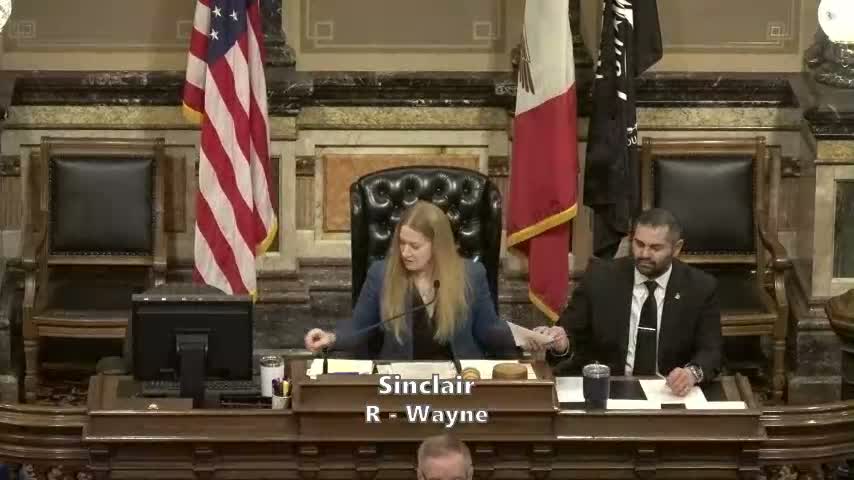
Summary
The secretary read a list of bills the House passed on March 2, 2026; the Senate approved its journal, the chair announced that House File 989 was referred to the Committee on Agriculture, and members voted to recess for a caucus and to await the state government committee.
The Senate clerk read a lengthy set of bills the House passed on March 2, 2026 and placed the list on the record. The reading included measures described on the floor as addressing foster care training (Senate File 2096), transmission line siting (Senate File 2214), bank board meeting requirements (Senate File 413) and a series of House files on topics ranging from school transportation costs to mental health facility requirements and insurance adjustments; most bills were introduced to the floor with titles only and no substantive debate.
"Madam president, the house has, on 03/02/2026, passed the following bills," the Secretary read as the clerk enumerated the items the House had transmitted. The transcript lists multiple Senate and House files by number and short description; the transcript does not provide committee reports or legislative text on the floor, and substantive details are not specified for most items.
Procedural actions recorded on the floor included approval of the journal. The presiding officer asked for corrections to the journal; hearing none, "the journal is approved as printed." The chair also announced that "pursuant to rule 38, House File 989 is referred from the Committee on Ways and Means to the Committee on Agriculture." Later in the morning, Senator Clemish moved that the Senate recess until the conclusion of the state government committee and Senate Republicans caucus; the chair put the motion to a voice vote, declared the motion prevailed, and recessed the Senate.
What was not included on the floor: the reading did not involve debate or recorded roll-call votes on the bills read; sponsors, committee actions and detailed provisions were not provided during the read-in. For follow-up reporting, the bill numbers read on the floor provide pointers for staff and reporters to retrieve full text, committee reports and vote histories from legislative records.