Get Full Government Meeting Transcripts, Videos, & Alerts Forever!
Get email alerts on the Certificates Of Obligation topic
No spam. Unsubscribe anytime.
Residents urge council to delay $30M borrowing; taxpayers and neighbors press for details
Summary
Multiple Amarillo residents urged the council to pull a proposed $30 million certificates-of-obligation (CO) borrowing from the agenda and pressed staff for fund-balance details, project prioritization and equity in where CO-funded work is being directed.
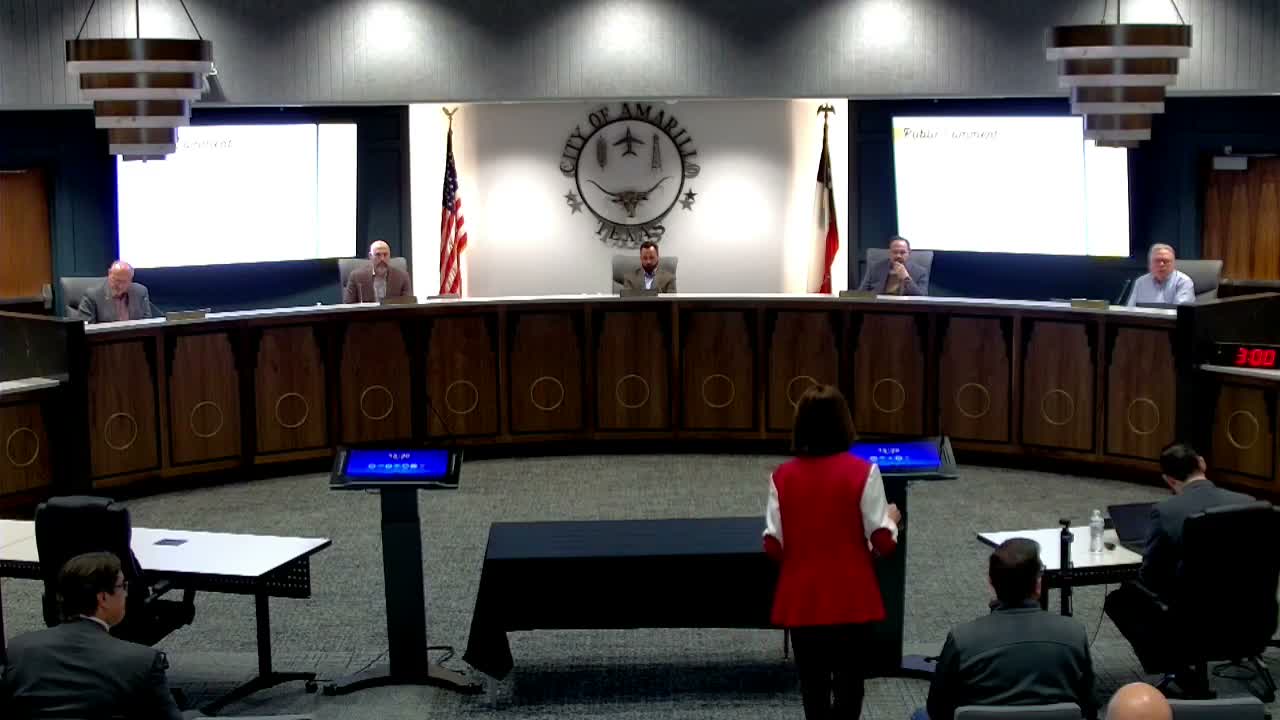
Multiple residents at the Feb. 10 Amarillo City Council meeting urged the council to remove a proposed $30 million certificates-of-obligation (CO) borrowing from consideration and to provide more transparent budget information to taxpayers.
LaVonda Mosley, a Potter County resident, asked the council to take the $30 million CO off the agenda, requested the current fund-balance figure and raised questions about prioritization for drainage, sewer and bridge work in her neighborhood. She said she has repeatedly asked for drainage and sewer upgrades in Tascosa Acres and urged council members to "show up in my neighborhood" rather than ask taxpayers for additional debt.
Several other residents echoed Mosley’s concerns. Thomas Warren, Potter County tax assessor, noted constituents who cannot pay existing taxes and said new borrowing will raise the tax burden even if only slightly. Dennis Petzold and others argued that economically disadvantaged families are already stretched and warned additional COs increase long-term tax obligations. Mike Fisher and others urged the council to consider the statutory intent of COs (to finance urgent or unforeseen needs) and to reassess whether the listed projects meet that standard.
Council members responded by saying the city had built debt-service costs into recent budgets and emphasized the difference between maintenance-and-operations (M&O) funds (capped at 3.5%) and interest-and-sinking funds used to pay debt. Councilmembers described a multi-year approach that builds debt service into rates and argued that some borrowing allows the city to plan consistent, annual maintenance rather than scrambling at the end of the season. Several councilmembers acknowledged the need for better, earlier communication with residents about how borrowing and budgeting interact.
No vote on the $30 million CO occurred at the Feb. 10 meeting; the mayor said the item was not ready and would be re-noticed for a later meeting.