Get Full Government Meeting Transcripts, Videos, & Alerts Forever!
Get email alerts on the Biosolids Permits topic
No spam. Unsubscribe anytime.
Public raises PFAS concerns as DEQ schedules hearing on Synagro Essex biosolids permit expansion
Summary
DEQ scheduled a public hearing May 19 for Synagro Central LLC’s Essex County VPA permit modification (VPA00831) after receiving 27 comments focused on PFAS and other contaminants; public speakers at the March 27 board meeting urged testing and use of enforcement authority to protect farmers and watermen.
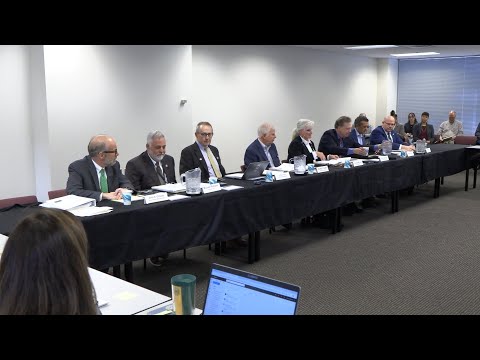
The State Water Control Board received public comment March 27 about PFAS and other contaminants in biosolids as DEQ confirmed a public hearing for Synagro Central LLC’s Essex County VPA permit modification (VPA00831).
DEQ staff reported that Synagro’s July 2024 application would add roughly 6,337 acres to the company’s existing authorized land-application acreage in Essex County (bringing the permit total to about 25,759 acres in that county). A draft permit and public-comment period (Jan. 8–Feb. 7) generated 27 comments; 26 commenters requested a public hearing. DEQ granted a hearing to be held May 19 and opened an April 16–June 4 comment period; DEQ expects to summarize hearing comments in late summer.
Public commenters at the board meeting urged stronger oversight. Dean Axe, Potomac Riverkeeper Network, urged the board to “exercise its authority,” citing national and regional findings of PFAS contamination in biosolids and arguing that Maryland testing shows levels that would be unsafe for Maryland farms and are being applied in Virginia. He said Synagro has reported detecting PFAS in biosolids but that DEQ had not requested that information; he called for testing and enforcement to protect public health and farmers.
Lee Deal of the Virginia Waterman's Association also urged expanded testing for heavy metals, microplastics and other compounds in biosolids and asked the board for oversight.
DEQ’s Office of Land Application Programs manager Neil Zorotka answered board questions about buffers and safeguards: setbacks to surface waters vary by circumstance—generally a 100-foot setback unless a 35-foot permanent vegetated buffer exists (in which case the setback is 35 feet); if a waterbody segment is listed as a public water supply it requires a mandatory 100-foot setback and 400 feet for public water-supply reservoirs. Zorotka said DEQ maintains an approved-sources list and reviews data for each material before approving land application.
DEQ also reported that an application for a Westmoreland County Synagro modification (VPA00835) was withdrawn earlier, removing that item from the controversial-permit list. DEQ said it will hold a public hearing for the Essex County permit and return later in the summer with a summary of hearing comments and next steps.