Get Full Government Meeting Transcripts, Videos, & Alerts Forever!
Get email alerts on the Stormwater Fees topic
No spam. Unsubscribe anytime.
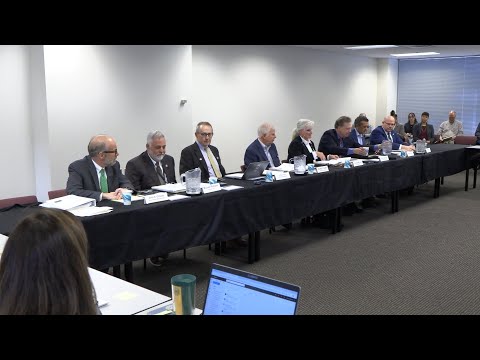
Board authorizes public comment on proposed stormwater permit fee increases to meet legislative cost-recovery target
Summary
DEQ recommended and the board authorized public comment and a public hearing on proposed increases to erosion and stormwater permit fees (MS4 and construction permits), aiming to raise fee revenue from about 38–39% to 60–62% of direct program costs; DEQ presented an approximate 61% increase to certain fees and proposed adding an annual CPI adjustment.
The State Water Control Board authorized a public comment period and public hearing on proposed amendments to the Virginia erosion and stormwater management regulation’s permit fee schedule after hearing a departmental presentation that the program’s fee revenue currently covers roughly 38–39% of direct costs.
Rebecca Roche, DEQ’s director of stormwater programs, said the 2024 budget bill directs the board to set permit fees at no less than 60% but not to exceed 62% of direct administration, compliance and enforcement costs. Using FY24 personnel and direct-cost data, Roche presented example schedules that would increase the DEQ portion of permit fees by about 61%, and she explained an option to raise DEQ’s share from 28% to 30% to moderate the total fee paid by permittees. DEQ also proposed adding a consumer-price-index adjustment factor to the regulation to keep fees aligned with program costs.
Roche described fee increases affecting municipal separate storm sewer system (MS4) permits, construction general permits (CGP) and permit maintenance/annual fees; she said fees had not changed in more than 15 years and cited program experience (about 93 local authorities administer much of the program locally; DEQ performs plan review, inspections and guidance). She provided fiscal-year data showing fee revenue shortfalls and said the proposed changes reflect the closest recent fiscal-year snapshot.
Board members asked about legislative history, the use of general revenue previously to subsidize the program, and the addition of CPI indexing; members praised the CPI proposal. DEQ recommended authorizing a public comment period and public hearing; the board approved that recommendation by voice vote and asked DEQ to serve as hearing officer.
DEQ will initiate the public-comment process; Roche said the department would return to the board before final adoption, and that adjustments may be made based on comments. The action does not itself change fees—it authorizes the public-comment period required before any final regulatory change.