Get Full Government Meeting Transcripts, Videos, & Alerts Forever!
Get email alerts on the Land Use Ordinance topic
No spam. Unsubscribe anytime.
Clallam County hears broad public opposition to proposed ADU, RV and short‑term rental rules; board asks staff to revise draft
Summary
Hundreds of public comments, many warning of displacement and economic harm, pressed the county to rewrite proposed zoning changes on ADUs, RV occupancy and short‑term rentals; commissioners asked staff for clearer language, FAQs and possible work sessions before any ordinance vote.
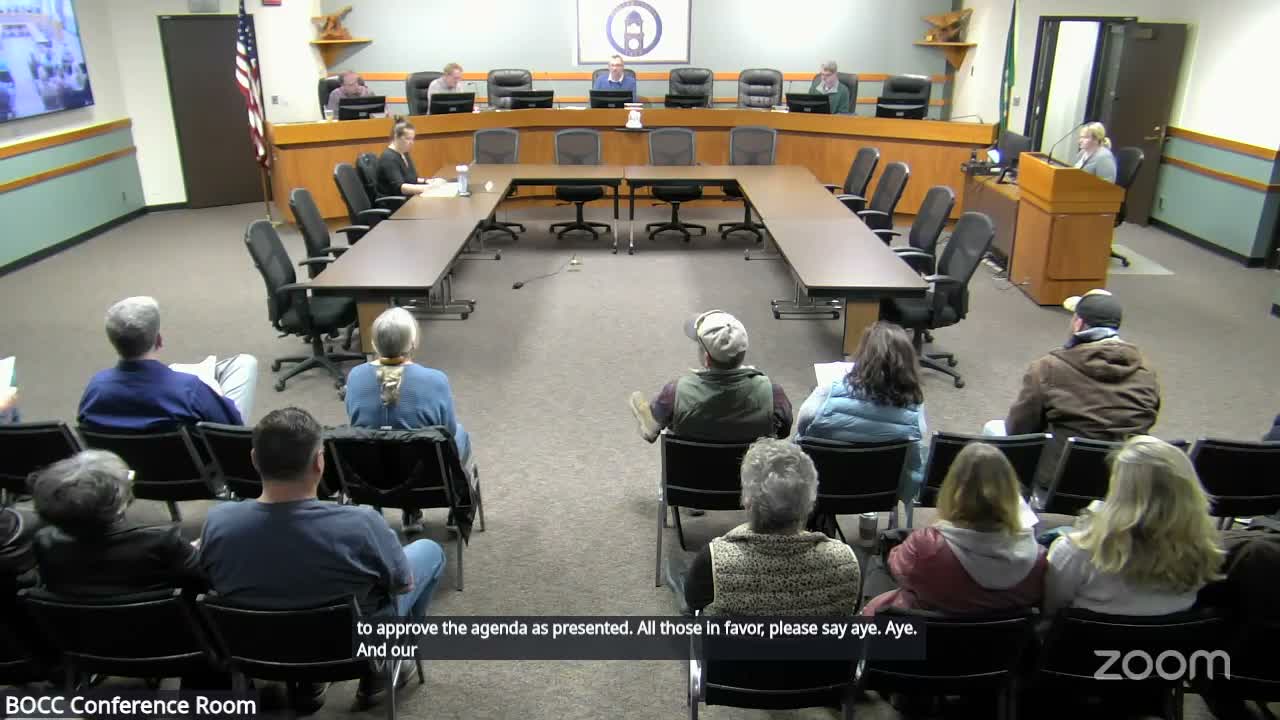
Clallam County commissioners spent the bulk of their Jan. 20 meeting taking public testimony and questioning staff about a proposed overhaul of zoning rules for accessory dwelling units (ADUs), recreational vehicles and short‑term rentals.
The county’s Department of Community Development presented a consolidated draft of Title 33 changes that would move several RV‑ and ADU‑related provisions into a single code section, require ANSI or Department of Labor & Industries standards for park models, allow a second RV on a parcel only by conditional use permit and remove the existing 90‑day limit on RV occupancy that applied under the county’s ADU rules.
Why it matters: The proposals aim to provide clearer, countywide rules for people living in RVs or using park models while also tightening standards for unpermitted conversions. Opponents said the draft would unintentionally criminalize longstanding housing arrangements and narrow low‑cost housing options in rural areas; supporters said clearer rules and safety standards are needed for public health and neighborhood quality.
What speakers told the board
- Jake Segars, who identified himself as “District 3,” urged commissioners not to adopt the ordinance as written, saying it “would effectively prohibit families from using RVs as extra bedrooms” and unfairly burden law‑abiding property owners.
- Kevin McSherry, citing county housing shortfalls and high median prices, urged liberalizing ADU rules to allow up to two ministerial ADU approvals per single‑family lot in urban growth areas and to remove owner‑occupancy and parking constraints as ways to increase supply.
- Kelly Sanders described the stakes for rural residents and short‑term rental operators: “These converted cabins, garage apartments and tiny homes are part of everyday life outside Port Angeles,” she said, warning that a blanket ban on unpermitted units could cause displacement.
- Community Development Director Bruce Emery told the board the draft is intended to clarify the code, to allow safe long‑term RV occupancy and to offer a path (conditional use) for an additional RV. He recommended approving the ordinance as an improvement over current scattered rules but acknowledged it raises hard policy trade‑offs.
Key technical and policy points raised
- Enforcement and grandfathering: Staff said structures continuously occupied and meeting the county’s vesting standards would be grandfathered, but converting storage sheds or other unpermitted buildings into dwellings without permits would remain prohibited.
- Conditional use costs: Commissioners and members of the public criticized the cost of a hearing‑examiner conditional use process (the county noted a typical hearing examiner fee of about $3,500), calling that barrier onerous for households seeking legitimate approvals.
- Urban versus rural treatment: The draft eases some ADU requirements inside urban growth areas (allowing two ADUs and loosening parking and size limits) but keeps tighter limits in rural zones to try to avoid unintended density increases that could run afoul of the Growth Management Act.
Board response and next steps
After extensive testimony and commissioner questions, the board did not adopt the ordinance. Commissioners asked staff to refine the draft language — especially the section on unpermitted structures (33.4100), the accessory housing definition, and the explanation of what requires a building permit versus a permit exemption — and to return with edits and outreach materials. The board suggested publishing FAQs, clarifying where rules would reduce vs. increase regulatory burdens, and holding work sessions or a joint meeting with the planning commission to walk through scenarios before any final vote.
What remains unresolved
Speakers asked for an economic impact analysis and clearer assurances that long‑standing occupied structures would not be displaced. Several commenters urged the county to prioritize enforcement on derelict properties before adding new requirements for law‑abiding residents. Staff said some policy options — such as limited exemptions (for medical hardship or acreage) and pre‑approved building plans — could be explored as part of revisions.
The board moved on without a final decision; staff will return with revised code language and likely convene additional sessions to reconcile public concerns with statutory constraints and enforcement realities.