Get Full Government Meeting Transcripts, Videos, & Alerts Forever!
Get email alerts on the Budget topic
No spam. Unsubscribe anytime.
Mansfield staff outline preliminary FY26 budget, state‑driven fee cuts and utility pass‑throughs
Summary
City staff presented a preliminary balanced FY26 budget and proposed fee changes required by Senate Bill 1008 that will cut some local health permit revenues by about $50,000; utility staff recommended passing modest TRA/TRWD cost increases to customers, estimating an average bill rise of about 4.7% for a 10,000‑gallon household.
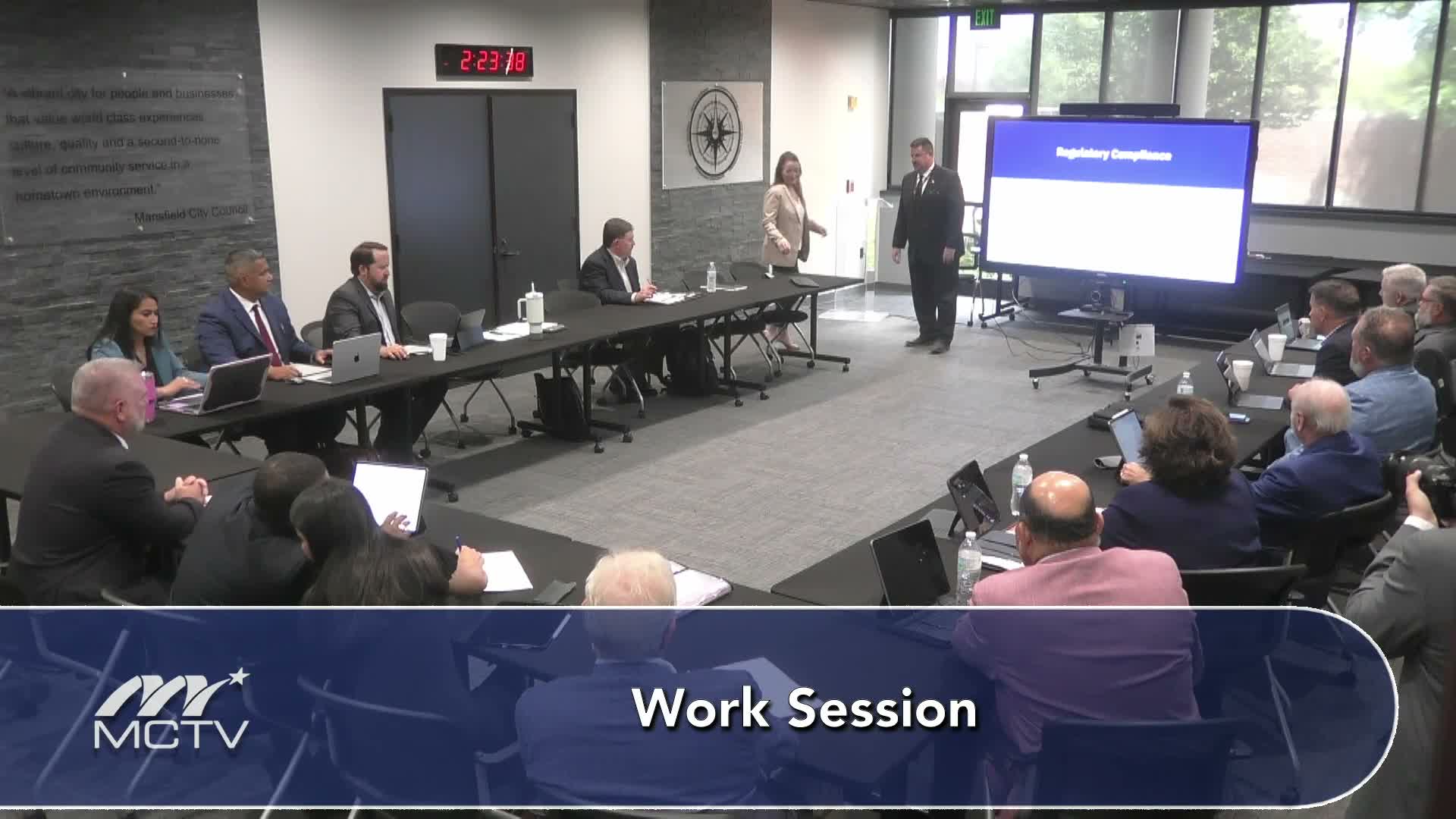
Mansfield officials on July 28 presented a preliminary, charter‑required FY26 balanced budget and walked council through several department fee changes and utility rate adjustments. Mayor (speaker 1) opened the afternoon session and staff said the numbers will be finalized at the council’s next meeting after the city receives final appraisal and tax data from Tarrant County.
Nicolette (speaker 9), who leads the city’s environmental/health permitting work, told council a new state law — Senate Bill 1008 — limits how much municipalities can charge compared with state fees. "We can't charge a higher fee than the state would charge them," she said, explaining proposals to lower or eliminate local fees above the state cap. Examples staff cited: reducing the mobile food truck permit from $3.50 to $2.50, cutting temporary event permits from $85 to $52, and removing a $150 on‑site late fee for operators who apply the day of an event. Nicolette said the changes require a follow‑up ordinance amendment to align local municipal code language with state rules.
City staff estimated the SB1008‑driven changes would reduce permit revenue by roughly $50,000 in 2026, largely because the city currently issues multiple adjunct permits to large grocers that the state treats as a single permit. "When we look at an establishment…we would not be issuing multiple [adjunct permits]," Nicolette said, describing a new consolidated grocery retailer permit that would be set near the state cap to recoup some revenue.
On utilities, Jeff (speaker 11) summarized cost pass‑throughs from regional providers. He said the Trinity River Authority’s central regional wastewater budget rose to about $236.8 million — a $27.7 million (13.7%) increase — and TRWD’s operating budget increased as well. "That equates to a 9.7% increase in our cost of service to our customers," Jeff said when describing combined pass‑throughs. Staff recommended a 54¢ per thousand‑gallon sewer pass‑through and a 3¢ per thousand‑gallon water pass‑through to cover higher wholesale charges. Using a 10,000‑gallon usage example, staff estimated the average combined water/wastewater bill would rise about 4.7% under the proposal.
Councilmembers asked for supporting data. A resident speaker during the public comment period asked staff to publish the utility fund’s cash‑reserve balance before any final vote; staff did not adopt a final change at the July 28 meeting but incorporated the proposals into the preliminary budget materials for final consideration on Sept. 8.
The city flagged next steps: staff will return revised ordinance language for fee items, publish updated budget packets, and hold two public hearings (first hearing 08/25; final reading and adoption 09/08).