Get Full Government Meeting Transcripts, Videos, & Alerts Forever!
Get email alerts on the Education Student Support topic
No spam. Unsubscribe anytime.
Yellow Breeches principal says incentives and structured support sharply cut incomplete work and failures
Summary
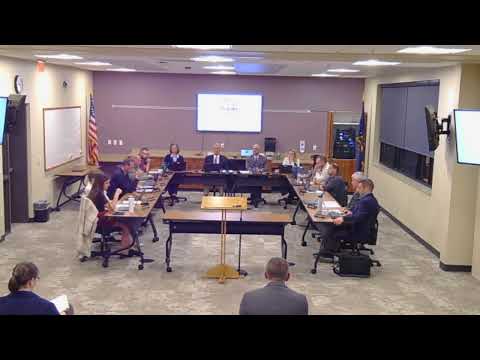
At a March 2, 2026 South Middleton School District board meeting, Yellow Breeches Middle School principal Mister Osich described a suite of incentives and support strategies (Critter Coin, Butler Hub, Butler Boost) he says reduced grade-book zeros and course failures; the administration also presented enrollment projections tied to future facility planning.
Mister Osich, principal at Yellow Breeches Middle School, told the South Middleton School District Board on March 2 that a combination of digital incentives and a structured support period has driven large declines in incomplete assignments and course failures.
"Through our system of Critter Coin, Butler Hub, and Butler Boost, we trimmed the number of zeros in the grade book after quarter 2 by 88% to 48," Mister Osich said, adding that course failures fell to seven this year from 25 in 2023–24 and 37 last year. He described the approach as moving "students from potential to actual" by reinforcing specific habits and pairing incentives with targeted interventions.
The administration earlier reported projected district enrollment and facility impacts that frame those school-level efforts. Doctor O'Donnell, addressing the board, said October 2025 enrollment stood at 2,190 and that roughly 2,500 new housing units are planned in the district over the next 10 years. The superintendent said five-year enrollment is expected to be in the range of about 2,500–2,700, with a 10-year projection of roughly 2,700–2,900, and he flagged Rice Elementary as likely to see the largest growth (about a 24% increase, roughly 100 students) over five years.
Osich described three linked practices: the Butler Pride digital points system (branded in the presentation as Critter Coin) that allows teachers to credit students for specified behaviors; the Butler Hub, a school store where students spend points; and Butler Boost, a structured flex period for completing missing work. He said teachers record both the reason for incentives and intervention activity in the system so staff can track patterns and follow up with families when needed. Osich also described a "boost reflection conference" where students and staff review why a student required extra support and how to help the student avoid repeat issues.
Osich offered school-level data to illustrate impact: after implementing the programs, he reported that zeros in the sixth-grade grade books fell from 252 in 2022–23 and 404 in 2023–24 to 48 in the current year; he characterized the declines in zeros and failures across grades as large. He cautioned the systems are not perfect and emphasized that teachers are documenting interventions and escalating supports when a student appears to need tier 2 help beyond motivation alone.
Board members responded with praise for the school culture and staff engagement. The president and multiple board members credited staff buy-in for the improvements and encouraged continued monitoring of the programs and data.
In other business, the board approved the meeting agenda, the February 17 minutes and the consent agenda (items 11a–11e) by unanimous roll-call vote. Advisory reports included a CPA CTC update on construction (completion of sewer and stormwater work) and a JOC resolution authorizing a public school facility improvement grant for roof replacement and abatement.
The board calendar notes an end-of-month budget meeting and the next regular board meeting on March 16. The meeting adjourned after a motion and second.