
North Penn SD leaders outline plan to convert in-house security to sworn district police officers, schedule student feedback
Get AI-powered insights, summaries, and transcripts
Subscribe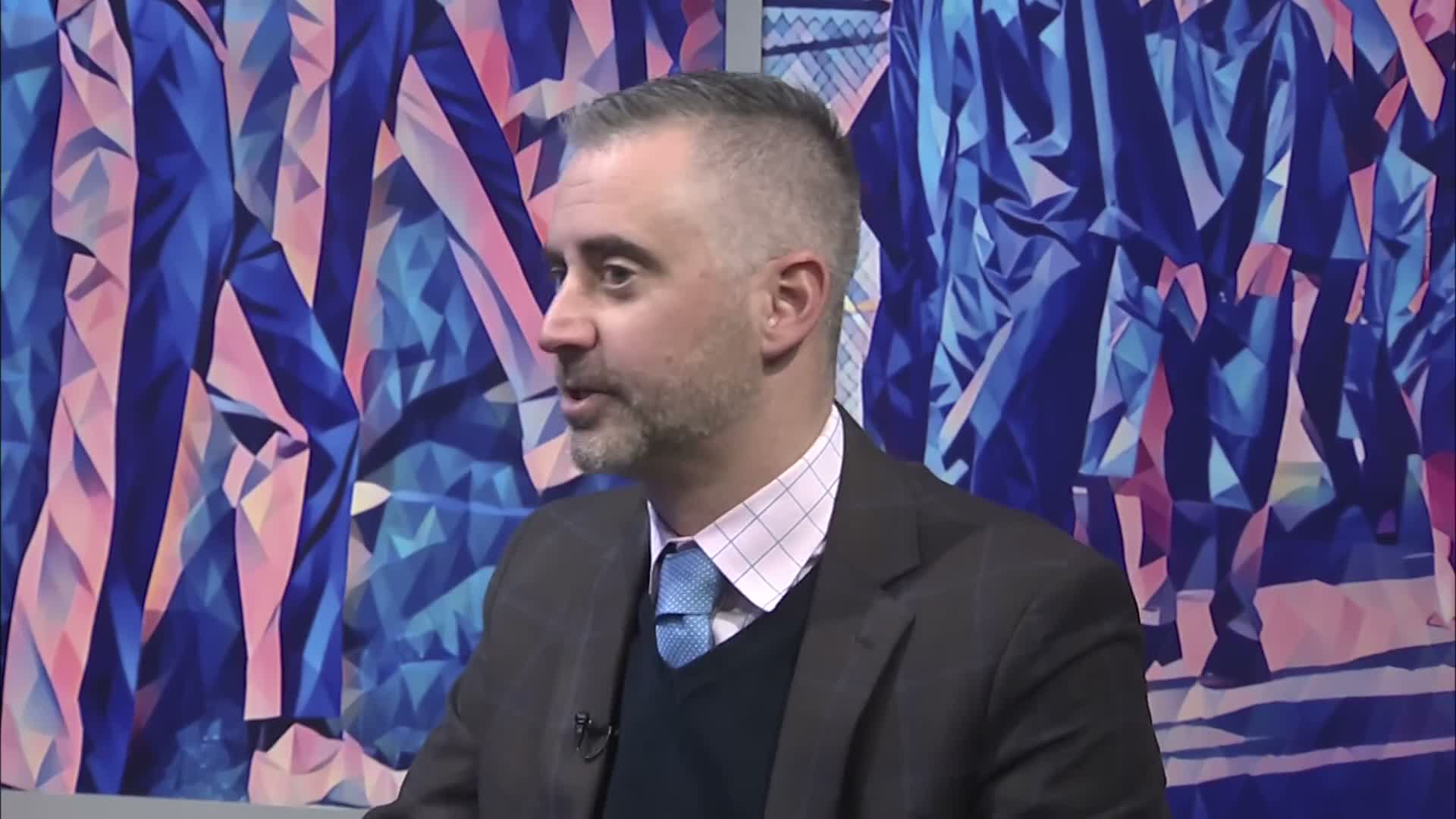
Summary
North Penn SD officials described a proposal to convert longtime in-house security staff into sworn, district-employed school police officers with Act 120 and NASRO training, discussed equipment and limits on police involvement in routine discipline, and announced student feedback sessions before a likely spring board vote.
Dr. Bauer, identified in the program as the superintendent of North Penn SD, said the district is considering creating sworn school police officers (SPOs) employed by the district rather than relying solely on municipal school resource officers.
"A school police officer would be a sworn police officer in the building who has the ability to do all the things that a police officer can. They could issue citations," Dr. Bauer said, explaining the practical difference between an SPO and the district's current unarmed security staff.
The district's coordinator of emergency management and safe schools, Brandon Roan, said the plan would largely draw on existing security personnel—many of whom he described as retired law-enforcement officers with long careers—rather than opening the selection to external candidates. "It really would be, security officers that are already in house," Roan said, adding that the district values staff who ‘‘know our kids’’ and have built trust over years.
Roan described training and certification requirements the district would impose. SPOs would meet Pennsylvania police training standards (Act 120) and complete National Association of School Resource Officers basic training, plus district-specific training on subjects such as special education and de-escalation. "We would have the standards, and then we would have requirements that are above standard required by the Commonwealth," he said.
Officials addressed concerns about weapons and use of force. Roan detailed planned uniforms and equipment: a traditional uniform in a different color from current security, a duty belt with a firearm, handcuffs and less-lethal tools such as tasers and OC spray, and a ballistic vest worn under the uniform. He said the district would avoid a more tactical-looking outer carrier. Dr. Bauer and Roan emphasized that the firearm would be intended for an extreme, external threat: "That that's the sole purpose...if someone were to come to one of our buildings and try to do harm to our students or staff," Dr. Bauer said.
Both leaders stressed that routine disciplinary matters—vaping, disputes among students, and other school-code issues—would remain administrative and not be escalated to law enforcement. Roan noted that current security officers are unarmed and cannot issue citations or complete accident reports for insurance; an SPO model would allow the district to handle some processes internally and potentially streamline citation-related paperwork.
Officials said students played a role in pausing a prior board vote and that the district has been meeting with students for feedback. Dr. Bauer announced drop-in student feedback sessions during lunches on "11, 12, 13" in the auditorium (dates given on the program) and said Roan and other staff would attend. Dr. Bauer said he expects the school board to consider the topic in the spring; if approved, he estimated implementation could begin in the fall of the next school year after necessary authorization steps.
The program closed with an invitation from communications coordinator Bob Gilmore for students to attend the sessions and ask questions.
Next steps: student lunch sessions as announced, followed by a board agenda item in the spring; no formal board action was reported during this program.