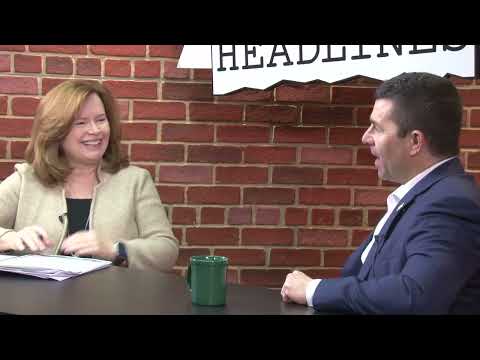
Rep. Jim Struzzi: governor’s $53.26 billion plan outpaces likely revenues and would draw down rainy day fund
Loading...
Summary
State Rep. Jim Struzzi, Republican Appropriations Committee chair, told Behind the Headlines that Governor Shapiro’s $53.26 billion budget proposal exceeds projected revenues by roughly $6.4 billion, would draw down the budget stabilization (rainy day) fund and relies on new revenues that Struzzi called uncertain.
Rep. Jim Struzzi (R), chair of the House Appropriations Committee, said the budget proposed by Gov. Josh Shapiro would spend about $53,260,000,000 while Pennsylvania’s expected revenues are roughly $47,000,000,000, creating an estimated $6,400,000,000 gap.
Struzzi told hosts Charlie Greenewalt and Mara Ganley on Behind the Headlines that the administration’s plan would tap the budget stabilization fund (commonly known as the rainy day fund), reducing reserves that he said were intended for economic emergencies. "When the governor took office...he basically inherited a $13,000,000,000 surplus," Struzzi said, and "every year his spending has exceeded revenues" such that the reserve has been drawn down.
Why it matters: Struzzi argued that using the rainy day fund to balance routine spending leaves the state less able to respond to future downturns and that drawing the fund down further transfers future fiscal risk to taxpayers. He said he and Democratic Appropriations Chairman Jordan Harris will scrutinize budget documents and hold hearings to identify essential obligations and areas of excessive spending.
Struzzi raised additional questions about a newly named "federal response fund" in the administration's materials, saying the governor proposes taking roughly $100,000,000 from the stabilization fund to seed that account but offered few details. "We don't know what that is," Struzzi said; he said committee review will seek clarity on why the fund is needed, how it will be used and how it will be tracked.
On proposed revenue measures, Struzzi said the administration projects about $750,000,000 in revenue from legalizing recreational marijuana but warned that much of that figure is front-loaded. The program materials, he said, rely heavily on upfront license and distributor fees that may not materialize at the scale projected; Struzzi characterized the administration's upfront-fee assumptions as "misleading and erroneous." (Transcript cites an upfront-fees figure of $506,100,000,000; that large figure appears inconsistent with the governor's $750 million projection and may be a transcription or reporting error in the program materials; it is quoted here as stated on the broadcast.)
Struzzi said human services already account for more than 40% of current and projected budgets and expressed concern that added social and mental-health costs tied to broader marijuana access could increase long-term human-services spending. He framed his caucus priorities for negotiations as lowering the overall proposed spending level, pursuing workforce development tied to incoming energy and data-center jobs, streamlining permitting, and advancing regulatory reforms to lower costs for working families.
Next steps: Struzzi said the governor’s speech is a starting point; the Appropriations committees will parse the numbers in hearings and work toward a budget that must be completed by the statutory deadline of June 30.