
Senate committee backs AI 'regulatory sandbox' for schools with red‑teaming, parental protections
Get AI-powered insights, summaries, and transcripts
Subscribe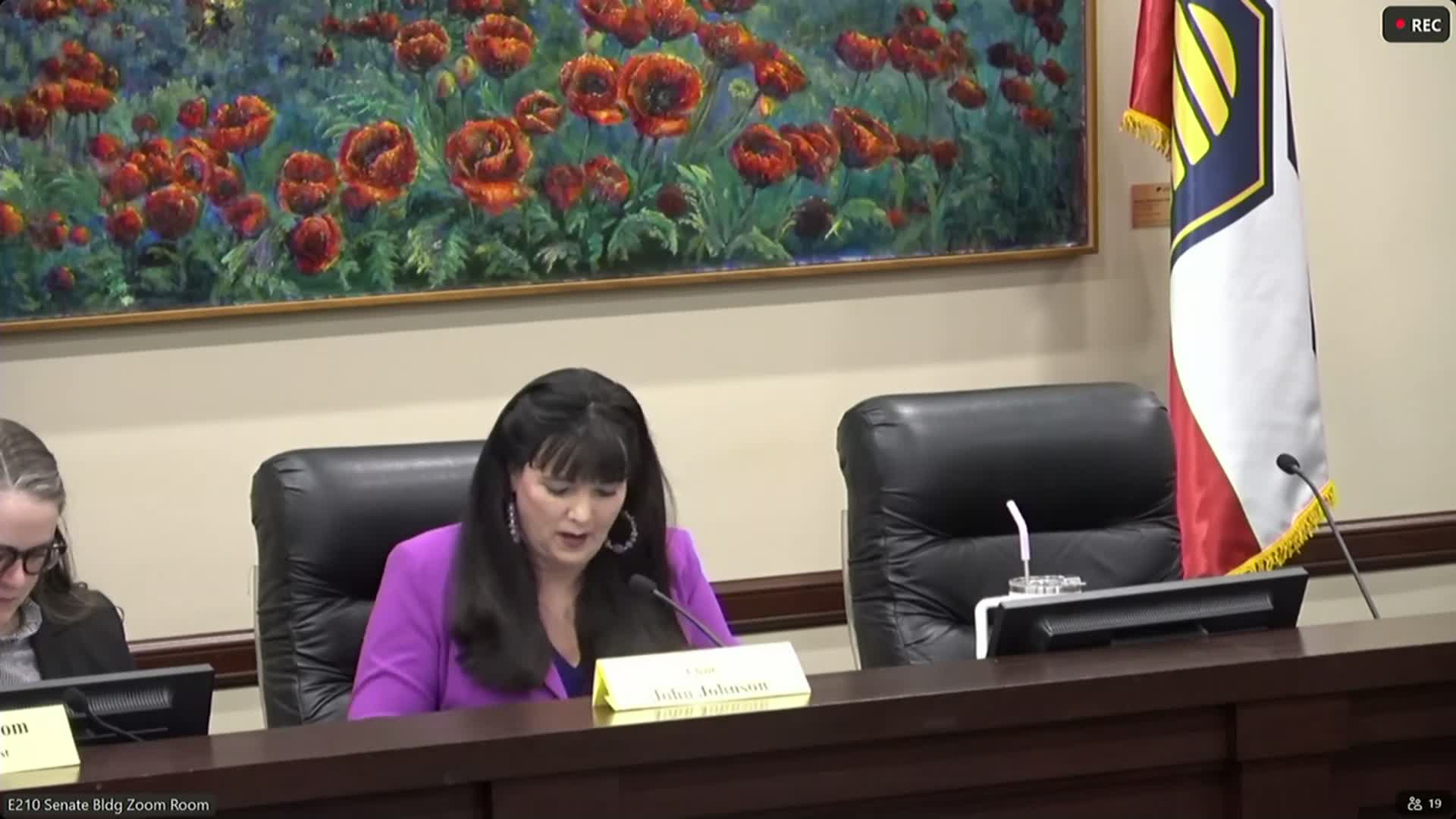
Summary
Senate Education Committee passed first substitute of SB 3.22 to the full body after the sponsor described a voluntary, time-limited AI pilot framework that requires vendor red‑teaming, educator training, human review of high‑stakes outputs, student data safeguards and independent evaluation.
The Senate Education Committee voted to send Senate Bill 3.22 (first substitute) to the full Senate after sponsor testimony describing a structured regulatory sandbox for education technology and artificial intelligence.
Senator Johnson, the sponsor, said the bill would create a voluntary, time‑limited pilot program (no more than three years) for AI tools in schools. Vendors would be required to complete adversarial "red‑teaming" testing and annually update that testing for multi‑year pilots; the bill also requires documentation of testing, public reporting of vulnerabilities and a 48‑hour reporting obligation for safety failures. The measure preserves parents' rights: parents must receive written notice before any AI interaction with their child and may opt out at any time without academic penalty, and students must be told when they are interacting with an AI rather than a human.
The bill would prohibit vendors owned by or subject to control by a foreign adversary from participating in pilots and bars sale or reuse of student data absent parental authorization. Independent, competitively selected evaluators would apply quantitative research standards (pre/post assessment, control or baseline comparisons, subgroup analyses and effect‑size reporting) to determine whether AI produced meaningful student learning gains. The State Board of Education would review pilot evidence and recommend any statewide adoption to the legislature; statewide adoption would require legislative authorization.
Committee members sought clarification about how the bill treats alternative assessments and what constitutes AI in routine tools. Senator Reedy warned that almost every digital tool contains AI elements and asked how the bill would distinguish allowable tools from prohibited ones; sponsor and supporters said further language work could clarify those boundaries. Parents' groups and Utah Parents United testified in support but asked for clearer procedural guidance on the voluntary opt‑in process.
The committee placed the first substitute on the calendar and recorded a favorable vote to move the bill forward.