Senate field hearing in Alaska urges faster Arctic infrastructure, Port of Nome build‑out
Loading...
Summary
Senate committee members and Arctic security experts at a field hearing in Nome urged faster, integrated federal investment in ports, icebreakers, forward basing and domain awareness to deter increasing Russia–China activity and to support regional economic resilience.
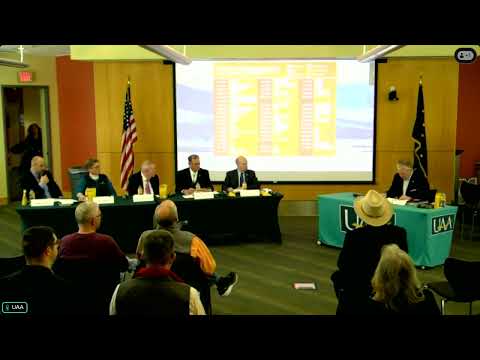
Chairman Sullivan opened a Senate field hearing in Alaska by tying recent geopolitical tensions to a longer trend of great‑power competition in the Arctic and urging fuller funding for homeland security components including the Coast Guard, FEMA and TSA.
The hearing featured five witnesses who described gaps in Arctic infrastructure and a set of policy steps to close them. "Security in the Arctic begins with presence. Presence requires access. Access requires infrastructure," said Mike Sperga, interim chancellor at the University of Alaska Fairbanks, who urged an integrated Arctic infrastructure strategy that prioritizes the Bering Strait, advances Port of Nome development, revitalizes the ADAC naval air facility and sequences port, icebreaker and communications investments.
Major General Randy Key, director of the Ted Stevens Center for Arctic Security Studies, told the committee that joint Russian‑Chinese operations near Alaska have moved from episodic signaling to a recurring seasonal pattern and argued that maritime investments should be aligned to four pillars: access, sustainment, awareness and connectivity.
Retired General Joe Ralston pressed for reopening forward sites such as ADAC, saying forward basing shortens response times and strengthens deterrence. "ADAC would strengthen the occurrence by denial," he said, stressing ADAC’s proximity to key approaches and its operational utility for logistics and surveillance.
Joy Baker, Port director and project manager for the Arctic Deep Draft Port in Nome, described the Corps of Engineers’ feasibility work and said construction will begin this summer. She said the 40‑foot protected basin has been designed to handle polar security cutters, destroyers, national security cutters and fuel tankers, and that the port will support regional economic development and oil‑spill response staging. "Construction of Nome's Arctic deep draft port will strengthen US national security interests throughout the Arctic," Baker said.
Captain Steve White of the Marine Exchange of Alaska described rising commercial and research traffic through the Bering Strait and outlined steps to close maritime domain‑awareness gaps, including terrestrial AIS and VHF expansions. He said a public‑private effort has installed dozens of AIS receivers and new VHF infrastructure but that large coverage gaps remain in Alaska’s coastal waters.
Committee members pressed witnesses on force‑posture options, contrasting a "surge‑to‑respond" model with forward, persistent basing. Witnesses argued the latter shortens transit times and reduces logistical burdens; they also warned against concentrating too many assets in a single location such as Guam. The panel discussed icebreakers as critical enablers: Sullivan noted budget lines in recent legislation intended to fund multiple icebreakers and shore‑side investments and said the Coast Guard has considered home‑porting up to four vessels in Alaska.
On the question of foreign research and presence, panelists said cooperation with China in multilateral research fora has not eliminated concerns over dual‑use activity and recommended strengthening inspection and monitoring regimes and integrating scientific instrumentation into security planning.
The hearing closed after audience questions from regional experts and plans for a concurrent press availability. Sullivan said the committee is starting to implement many of the recommendations but urged continued, sequenced federal investment in ports, force posture and maritime domain awareness to respond to the rapidly evolving strategic environment in the High North.
The committee did not take votes; witnesses submitted longer statements for the record and the hearing will inform the committee’s oversight and future legislative priorities.