Get Full Government Meeting Transcripts, Videos, & Alerts Forever!
OCS says licensing times and relative-search practices have improved but gaps remain for rural fingerprinting and youth supports
Summary
OCS told the Senate committee it has shortened licensing processing to about 43 days, reinforced background checks and fingerprinting (with rural challenges), stood up a placement search and support unit, and is exploring ways to restore and strengthen supports for young people entering higher education after losing a prior higher-education support position.
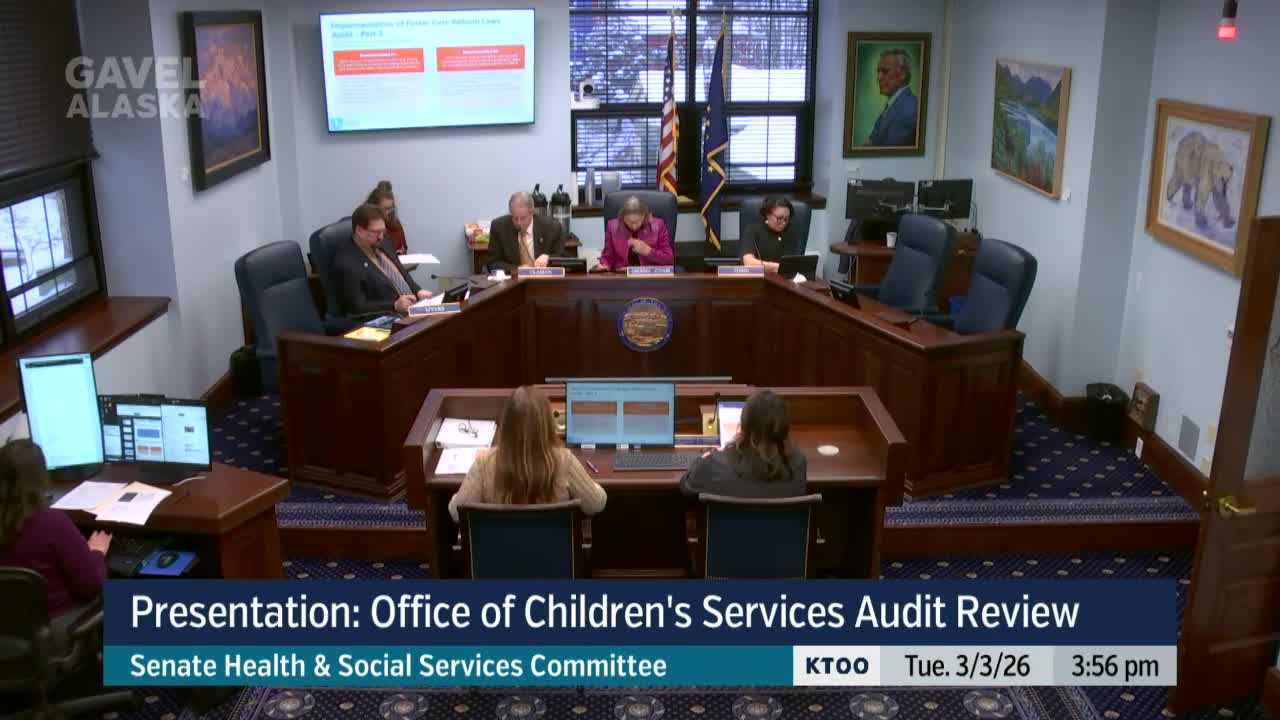
Office of Children's Services officials told the Senate Health and Social Services Committee on March 3 that they have made progress on audit recommendations about background checks, licensing timelines and supports for older youth, but operational gaps remain — particularly for rural fingerprinting and the recently lost higher-education support position.
Director Kim Guay said Part 2 of the HB 151 audit (Nov. 2023)…
Already have an account? Log in
Subscribe to keep reading
Unlock the rest of this article — and every article on Citizen Portal.
- Unlimited articles
- AI-powered breakdowns of topics, speakers, decisions, and budgets
- Instant alerts when your location has a new meeting
- Follow topics and more locations
- 1,000 AI Insights / month, plus AI Chat