
Johnson County Contractor Licensing Board opposes Kansas House Bill 2588 as drafted
Get AI-powered insights, summaries, and transcripts
Subscribe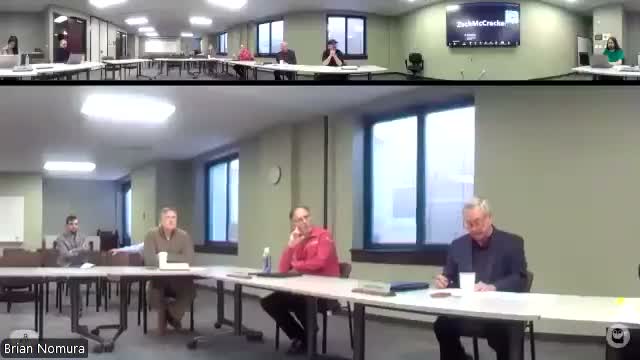
Summary
After a virtual special meeting, the Johnson County Contractor Licensing Board voted to oppose House Bill 2588 as currently written and authorized staff to submit testimony, citing unclear language about whether the bill licenses contractors or individual workers, questions about insurance and testing, and concerns about placing the program under the State Fire Marshal.
The Johnson County Contractor Licensing Board voted to oppose Kansas House Bill 2588 as currently drafted and authorized staff to submit written testimony after a virtual special meeting dominated by contractors and code officials who said the bill is vague and risks harming small and service-oriented firms.
Curtis, of the Heart of America chapter of the International Code Council (ICC), told the board that building officials are "not necessarily against statewide licensing" in principle because reciprocity could reduce duplicate licensing costs, but said the draft leaves unclear how a state license would integrate with local permitting, registration and enforcement. "It's just coming up with a program that would work with...keeping with some home rule things," Curtis said, urging the board to press the bill sponsor for clarifications.
Karen Serkovich, a Johnson County plumbing and mechanical contractor, said the measure would largely affect small service contractors and could impose disproportionate burdens. "I think this is very ill advised and would drastically, drastically hurt the service side of our industry," she said, adding that placing authority with the State Fire Marshal is problematic because the office already lags on updating electrical code standards.
Dusty Grama of Electric Associates said the bill's wording appears to push toward individual worker licensing and classroom-hour mandates that conflict with multiple apprenticeship pathways. "If they want a state license, I think it's more of a grab for revenue than it is about anything else," Grama said, arguing the bill needs substantial rewriting to avoid impeding entry into the trades.
A building official on the call raised process and enforcement concerns, saying the draft would allow the State Fire Marshal to take action against a licensee before the licensee receives a review hearing and that the bill references testing agencies that may not administer electrical exams. "The way this is written, its in the reverse order of that," the official said, warning the language could open the door to consumer complaints without clear parameters.
Cindy Geier, who spoke during the meeting, noted that the state currently handles certain registrations and limited licensing for fire-related specialties but said registration is not the same as a comprehensive licensing program and that the state lacks a regular public board forum comparable to the county's monthly meetings.
Representatives from Sedgwick County's Metropolitan Area Building and Construction Department (MABCD) echoed concerns, calling the draft "half-baked" and pointing to operational gaps around who would administer exams, how licensing would link to permit and inspection workflows, and whether local continuing education programs would lose funding.
After hearing broad concerns about scope, training-hour requirements, insurance and the administrative structure, the board moved to oppose the bill "as currently drafted" and to authorize submitting testimony. A voice vote carried with multiple members saying "Aye"; no opposing votes were recorded during the exchange.
The board asked staff to draft a formal letter reflecting the board position, to share a template that contractors can use when contacting legislators, and to distribute meeting materials and a recording online. Participants were urged to contact the commerce committee staff and local senators and representatives. The meeting closed after the vote.