
House passes bill limiting face coverings for law enforcement after lengthy debate
Get AI-powered insights, summaries, and transcripts
Subscribe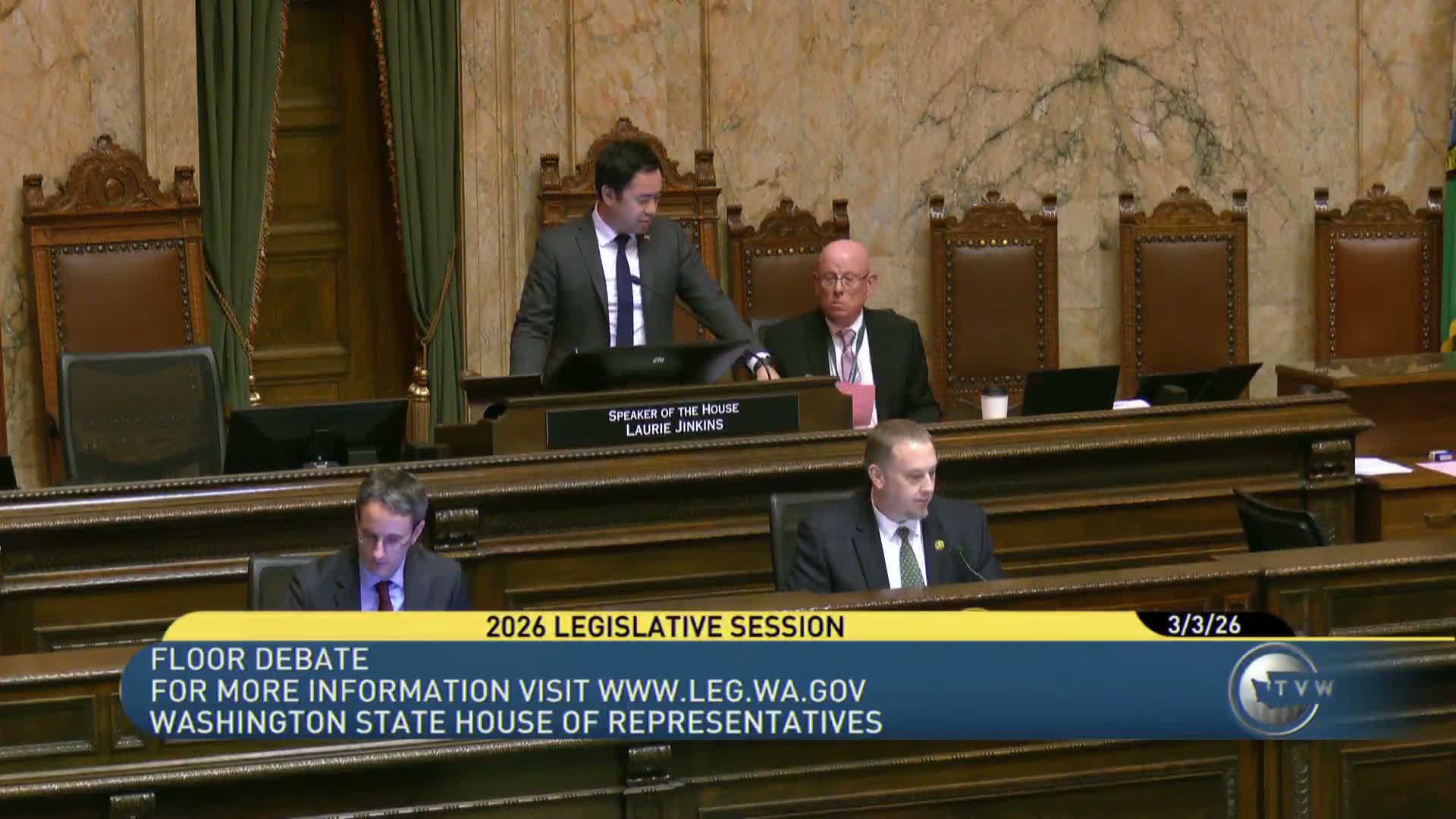
Summary
The Washington House on final passage approved Substitute Senate Bill 5855, which restricts when law enforcement officers may cover their faces during public-facing duties. Supporters said the measure increases transparency; critics warned it could undermine officer safety and raise constitutional and litigation concerns.
The Washington State House approved Substitute Senate Bill 5855 on final passage after hours of debate and dozens of amendment votes, with the final roll call reading 56 yays, 37 nays and 5 excused.
Representative Lorena Cortez (39th District) framed the bill as “about accountability,” saying the measure requires public-facing officers to be identifiable and helps preserve public trust after reported incidents involving masked federal officers. “This policy is about accountability,” Cortez said on the floor, urging colleagues to support the amended measure.
Opponents said the bill could hamper law enforcement operations and be vulnerable to legal challenge. Representative Graham (6th District) said he opposed the policy, arguing it would remove tools and protections officers sometimes need in dangerous or exigent circumstances. “I am rising in opposition of this policy today,” Graham said during floor debate.
Representative Noel Walsh (19th District) criticized the bill’s structure and scope, calling it flawed and predicting it would sweep local law enforcement into a framework intended mainly to address federal practices. “Bad bill. Vote no,” Walsh said, warning the bill creates a private right of action that could flood courts.
Throughout the day the House considered and voted on many amendments to narrow or expand the bill’s exceptions. Some amendments carving out narrow exceptions for undercover or helmeted officers were rejected; others clarifying intent language or preserving certain safety exemptions were adopted. The chamber ultimately adopted the community safety committee amendment as amended, then advanced the bill to final passage.
Supporters argued the bill balances officer safety with public transparency by preserving specific exceptions — for example, federally regulated safety equipment, active undercover operations and narrow operational exemptions — while making anonymity the exception rather than the rule.
Opponents, including several members with law-enforcement backgrounds, warned of unintended consequences: removing discretion from sheriff’s offices, potential conflicts with federal supremacy, and a private right of action that could trigger litigation. Representative Graham and others said the bill could prompt legal challenges over control of operational decisions by elected sheriffs.
The House’s final disposition came after a lengthy sequence of roll calls and amendment votes; the clerk announced the final tally and the presiding officer declared that Substitute Senate Bill 5855, as amended by the House, had passed. The bill will now proceed per legislative process for enrollment and transmission to the governor or further reconciliation per standing rules.
The debate highlighted tensions between public demands for visible accountability in policing and lawmakers’ concerns about preserving officer safety and operational discretion. The House recorded the final passage and then recessed for caucus.