Senate committee advances truancy reform that boosts diversion and limits adult criminalization
Loading...
Summary
A Senate Judiciary committee Monday agreed to a committee substitute for a truancy bill that expands pre‑petition diversion, removes criminalization for people 18 and older, and requires family‑preservation services; the measure was reported to the full Senate with a recommendation to pass.
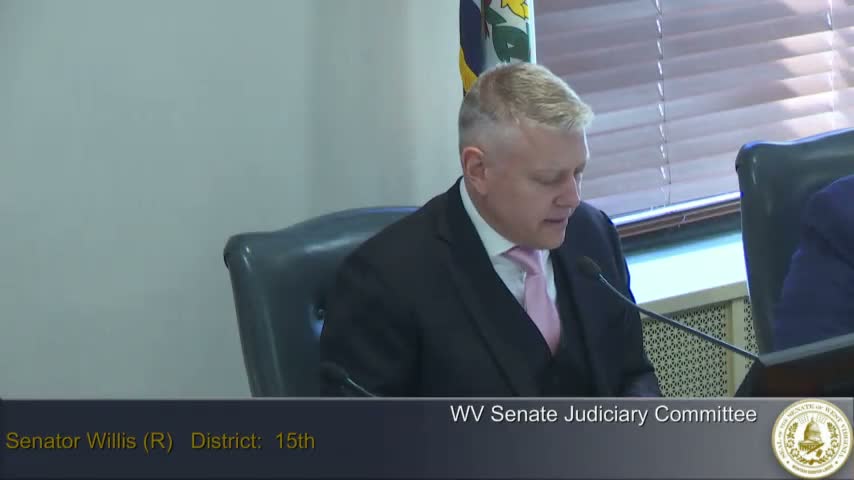
The West Virginia Senate Judiciary Committee on Monday agreed to a committee substitute for Senate Bill 901, backing changes intended to shift many truancy matters away from criminal prosecution and toward family‑preservation interventions.
Committee counsel said the substitute, introduced at the governor’s request, strikes a 60‑day sentencing delay for adults, removes the criminal truancy offense for people 18 or older and creates two new statutory sections in the juvenile and criminal chapters to allow pre‑petition diversion and early referral to social‑service personnel. “Before a juvenile petition is formally filed with the court, the court may refer the matter to a caseworker, probation officer, or a truancy diversion specialist for preliminary inquiry to determine whether the matter can be resolved informally,” counsel told the committee.
The substitute entitles a first‑time truancy offender with no other pending criminal charges to a written pretrial diversion agreement of no less than six months and no more than 18 months; for second offenses or where a criminal charge is pending, the diversion minimum rises to 12 months and the maximum to 24 months. Counsel said successful completion precludes prosecution, while failure allows the prosecutor to proceed.
The measure also requires the Department of Human Services to initiate home‑based family preservation services when matters are referred to the department, and it gives judges discretion to set status hearings or refer a caseworker to attempt informal resolution. Counsel noted the substitute contains technical changes and that a fiscal note had been requested but not yet received.
Senators asked clarifying questions about the bill’s relationship to the state compulsory attendance statute and how local truancy officers are appointed. Katie Franklin, deputy general counsel to the governor, confirmed the substitute does not change definitions tied to the compulsory attendance statute and said the bill is focused on parental accountability rather than age‑based withdrawal. Senator (Brook) secured two clarifying amendments — replacing language that referenced “June, July, or August” with “prior to the beginning of the school year” and inserting “board of education” where the bill referenced “school” — and those amendments were adopted by the committee.
After debate and amendment, the committee voted to agree to the committee substitute and to report the measure to the full Senate with a recommendation that it pass; the motion also directed its first referral to the Finance Committee under the bill’s double reference.
The committee record shows voices in favor and no recorded roll‑call tally for this item. Counsel said the bill’s fiscal note was still pending.