Lifetime Citizen Portal Access — AI Briefings, Alerts & Unlimited Follows
Public hearing on dune walkover at 415 E. Beach Drive draws technical questions on design and materials
Loading...
Summary
Planning staff presented a revised mitigation plan for a new dune walkover at 415 East Beach Drive that would extend roughly 26 feet beyond the vegetation line; commissioners asked about fastener durability, ADA access and concrete pathways. The hearing drew no public speakers and no decision was made.
Planning staff presented a revised mitigation plan and site drawings at a public hearing before the Galveston Planning Commission for a proposed dune walkover at 415 East Beach Drive, saying the redesign required a fresh mitigation review.
"This is a public hearing for dune mitigation associated with construction of a new dune walkover to replace an existing dune walkover," Planning staff member Hunter told the commission, noting an accompanying Bureau of Economic Geology map showing the coast in that area is accreting about 4 feet per year.
Staff said the reconfigured walkover relies on an alternate-design allowance in the local plan (section H12) that can be applied to high-traffic, ADA-accessible sites. Under the proposal the structure would extend about 26 feet beyond the line of dune vegetation; staff described the length as "fairly minimal" and said the structure is not expected to be an obstruction.
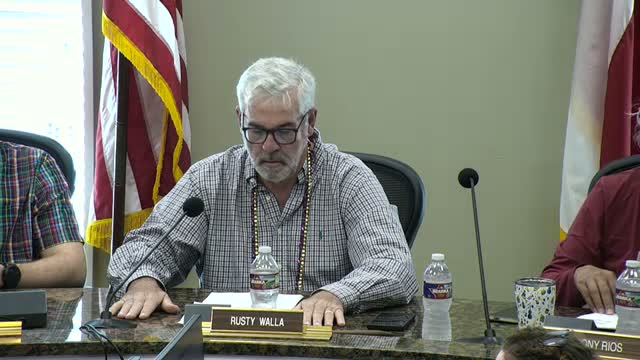
Commissioner John pressed staff on construction details after reviewing the plans. John said he noticed the engineer specified "hot dip, galvanized nails" and described prior local walkovers where many galvanized fasteners failed over several years. "Can the city of Galveston change its rules ... to require stainless steel fasteners instead of allowing galvanized?" he asked.
Staff responded that material selection is generally a builder's means and methods and that the city cannot unilaterally dictate the engineer-stamped plans. Hunter and another staff member suggested the observation could be routed to the building official and to a quasi-judicial board that reviews material recommendations. A commissioner called that a useful recommendation to pass to the building division for consideration.
Commissioner Stan asked whether a concrete pathway section shown in the plans would use the city's standard breakaway concrete. Staff said a change in TAC rules about 18 months earlier allows concrete pathways to be used in conjunction with ADA access in some circumstances, and that the area in the plans sits outside the 75-foot zone from the dune where concrete is restricted.
Chair opened the hearing to public comment; no members of the public spoke. The chair closed the hearing and indicated the item would return to the commission for action at a later date. No formal action or vote was taken at the hearing itself.
Why this matters: dune walkovers interact with coastal processes, access rules and ADA requirements; commissioners flagged material durability and pedestrian safety as items for staff to track if the project advances.