
Rep. Kennedy’s PCS for personnel-student communication law restores duty to act while adding corroboration requirement
Get AI-powered insights, summaries, and transcripts
Subscribe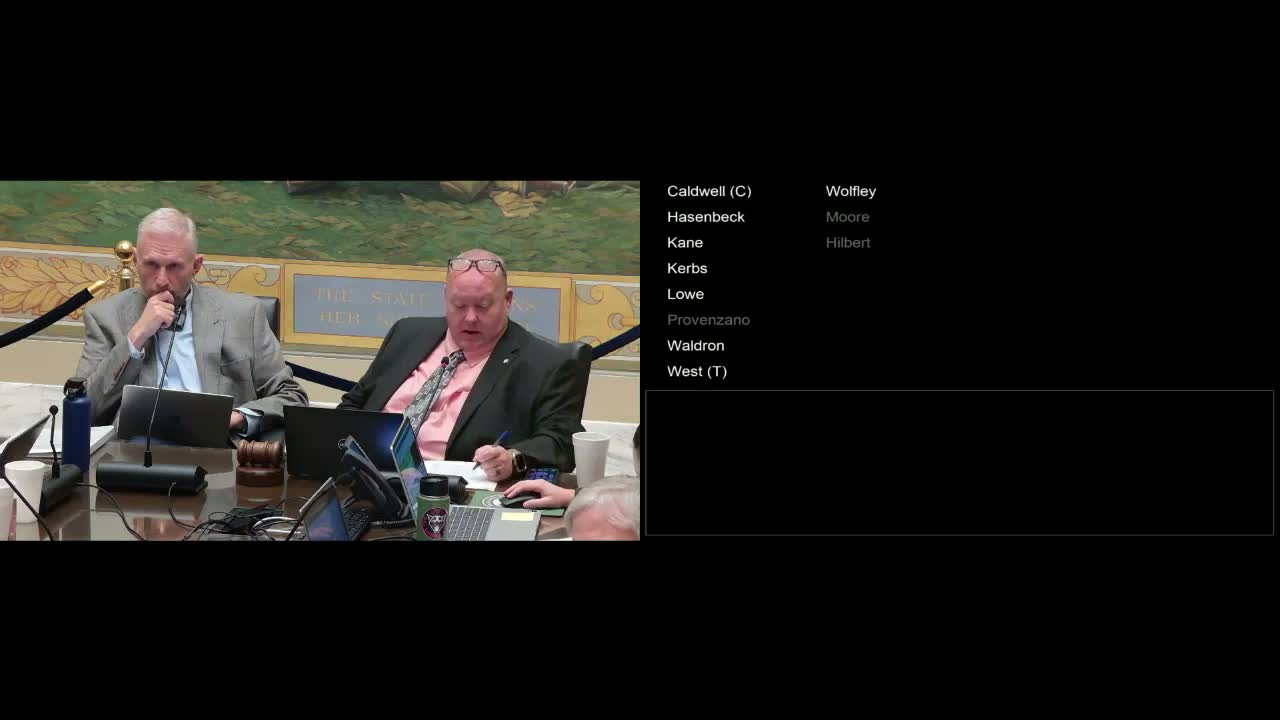
Summary
Rep. Kennedy presented PCS 3 to HB 19‑37 to require administrators to act on student‑personnel communications allegations but only when there is some corroborating evidence; committee members debated whether the change conflicts with separate 24‑hour reporting proposals and whether testimonial corroboration suffices; the committee gave the PCS a do‑pass recommendation.
Rep. Kennedy presented PCS 3 to House Bill 19‑37 to clarify how schools should handle allegations of improper communications between students and personnel, saying the draft restores a mandatory duty to act while adding a requirement that administrators have some corroborating evidence before suspending staff.
The PCS, Kennedy said, aims to prevent false or malicious complaints from being used to “weaponize the statute” while preserving protections for students. “What this is preventing is, again, the weaponization of the statute and false allegations from coming forward,” Kennedy said, arguing that requiring corroboration would protect school personnel from unfounded suspensions while still allowing legitimate investigations to proceed.
Vice Chair Caldwell and Representative Hasselbeck both pressed the sponsor on how corroboration would work in practice and whether testimonial reports — for example, a parent reporting that a student deleted an offending text — would be sufficient. Kennedy replied that corroboration need not be tangible and that testimonial statements could qualify: “Cooperating evidence can be testimony... it doesn’t have to be something tangible,” he said, and added that verification (for example, confirming the caller’s identity) would guard against false claims.
Members also raised the possibility of a conflict with other pending legislation that would impose a 24‑hour reporting deadline for certain criminal reporting requirements. Kennedy acknowledged the risk of overlapping statutes and said such conflicts would need to be deconflicted if both measures become law, but he maintained that requiring corroboration would not undermine timely reporting of serious allegations.
Representative Hasselbeck asked whether the PCS would make it easier to prosecute predators by ensuring administrators take action; Kennedy said it would, because the statute’s requirement to investigate and report would create an additional basis for later criminal prosecution if administrators failed to act. “With the criminal aspect of it, this adds an additional layer... they shall report it,” he said.
The committee discussed the balance between protecting students and preventing misuse of the reporting process. Caldwell noted the priority of student safety and said she appreciated the sponsor’s efforts to strike that balance; Kennedy said he shared the goal of protecting students while crafting “good law.”
After questions and debate, the sponsor moved for adoption of PCS 3 and the committee approved the measure as a do‑pass recommendation. The committee chair said the PCS will be sent out as a do pass; no recorded roll-call tally was provided in the transcript for this item.
The committee moved on to other business after completing consideration of the PCS.