Spahn Ranch presents two conceptual skatepark designs for Danville City; community discusses bowl, court and lighting trade-offs
Loading...
Summary
Spahn Ranch presented two conceptual layouts for a proposed Danville City skatepark and solicited resident feedback on trade-offs including whether to place the park over an existing basketball court, bowl depth and whether lighting should be added later. Designers will consolidate feedback into a single concept.
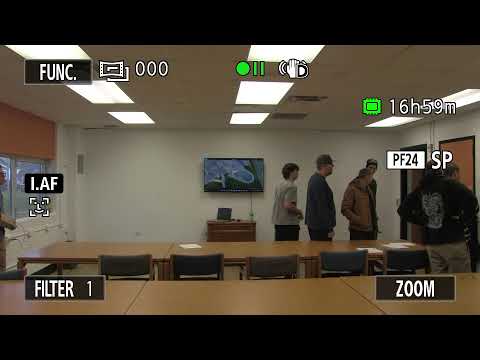
Designers from Spahn Ranch Skateparks on Thursday presented two conceptual layouts for a proposed Danville City skatepark and asked residents to weigh in on features, placement and budget trade-offs.
Adam, a designer with Spahn Ranch, framed the plans as concepts rather than final designs and said feedback from the meeting and an earlier online survey will determine the final layout. "These are not anywhere near the final designs," Adam said, adding the park shown in the concepts would be roughly 10,000 square feet.
The two options differ chiefly in placement and bowl configuration. "Option 1 does cover the basketball court," Adam said when describing the first layout, which he said has less elevation change and an enclosed bowl that typically requires riders to 'drop in.' Option 2 shifts the park away from the court, places more features on higher ground and shows an open-bowl configuration or an alternative roll-in that would let less-experienced users enter without dropping in.
Residents questioned several practical details. Adam said typical bowl depths being considered are about 4 to 6 feet but cautioned that a 6-foot bowl could conflict with the site's existing storm drain and might require grading or drainage work. "If the drain system's higher than that we got an issue," he said.
The conversation also focused on flow and street-style features versus transition terrain. Several attendees urged more open spaces and flow-friendly lines rather than stair-heavy sections, warning that stair sets can "kill the flow" for cruising riders. Designers said features shown in the concepts are flexible: "None of these features have to stay," Adam told the group, and encouraged participants to note what to keep or change on one-page feedback sheets distributed at the meeting.
Lighting and phasing were also raised. Adam said lighting is not in the current construction scope but could be added in a later phase if funding allows and the city prioritizes it. "If we take even money out for lights, this park gets a lot smaller," he said, explaining the trade-off between finishes and park size.
Multiple attendees noted the designs should accommodate scooters and younger users. Adam said the survey showed most wheeled users are skateboarders but added that many features will still be usable by scooters or bikes in places.
Tommy, who introduced the meeting and represents the city's project oversight, said the team hopes to consolidate feedback and move the project toward final design. Participants were asked to submit written feedback before designers combine comments into a single design for the next public review.
No formal decision or vote was taken at the meeting; organizers said the next steps are to synthesize comments into a revised concept and schedule a follow-up presentation.