Texas Tech seeks landowners to host weather stations and three radars to close Hill Country coverage gaps
Loading...
Summary
Texas Tech told Brown County commissioners it has roughly $24 million from Senate Bill 5 to expand the West Texas Mesonet, add three high-resolution radars and build a Texas-focused forecasting system; the university is seeking landowners willing to host stations or radar sites and offered negotiable five-year leases.
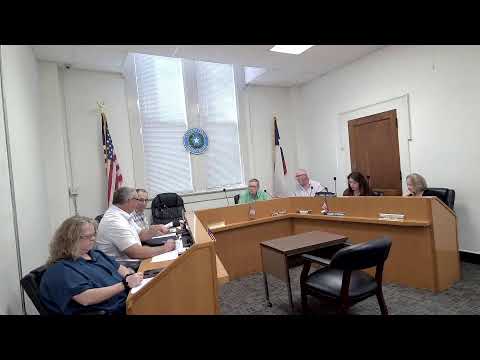
Brian Hurst, a research professor at Texas Tech University, told the Brown County Commissioners Court that Texas Tech received roughly $24,000,000 through Senate Bill 5 to build a measurement and prediction system to improve forecasting across the Hill Country and for the state of Texas.
"We received funding from the state of Texas through Senate Bill 5…to develop a measurement modeling system to serve the state," Hurst said, describing three project components: expansion of the West Texas Mesonet, deployment of high-resolution radar coverage for the Hill Country and a Texas-focused prediction model. He said the Mesonet currently operates about 176 10-meter towers and the project is targeting 40–50 new stations in the region.
Hurst said the project will deploy multiple Mesonet stations across Brown County; he noted the first Brown County Mesonet station was scheduled to start the next day. Data collected every minute will be transmitted publicly every five minutes and provided to the National Weather Service and emergency managers.
On radar coverage, Hurst said a gap in low-level radar data exists across the Hill Country and that Texas Tech proposes three radar sites "just south of Brownwood, near Fredericksburg, and to the west near Sonora" to close that gap. He described site requirements: high terrain, a 360-degree view, and access to three-phase electrical service. The radar installations would occupy roughly a 50-by-50-foot footprint with towers about 70 to 85 feet tall and a small shelter; Texas Tech said it would handle site preparation, permitting and installation.
Hurst said Texas Tech would offer negotiable lease payments for host landowners and is seeking an initial lease term of about five years. "We anticipate the state is going to fund this program for many years into the future, so we hope we'll be able to extend beyond the 5-year period," he said.
During a brief question-and-answer period, Sharon asked whether livestock on leased land would be restricted. Hurst replied, "I don't believe so. There's nothing about that system itself that would limit that."
Hurst emphasized the project is a public, state-university effort and not a commercial or proprietary system; he left contact information and asked the court to help connect Texas Tech with willing landowners.
The presentation included maps and site-scouting notes; Hurst said Texas Tech had scouted roughly 30 candidate sites and has vendors under bid for equipment supply. The next procedural step, as stated on the record, is outreach to identify host landowners and to negotiate individual leases; no local approvals or site agreements were recorded during the meeting.