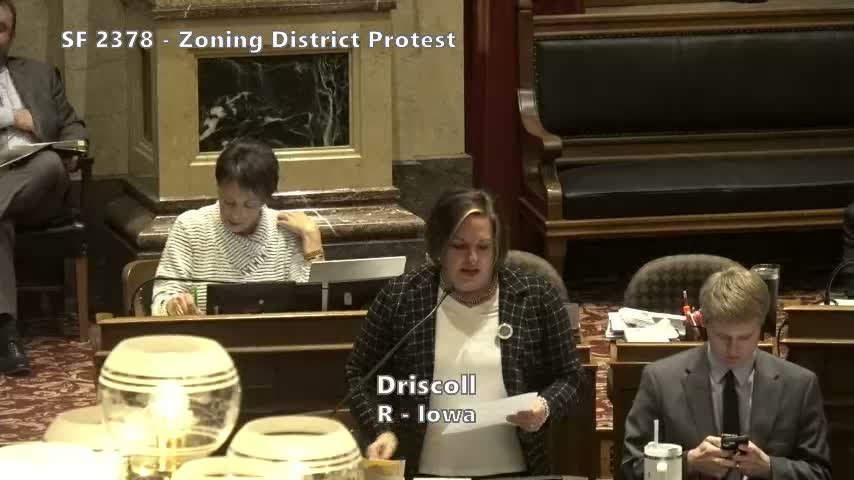
Senate passes bill easing zoning changes by removing petition/supermajority barrier
Loading...
Summary
Senate File 23‑78 repeals a city‑petition/supermajority requirement that had allowed a timely petition (signed by property owners or owners within 200 feet) to force a 3/4 council vote on zoning changes. Sponsors called it a property‑rights and affordability measure; opponents said it removes protections for adjacent property owners.
The Senate passed Senate File 23‑78, a bill that removes the petition and supermajority protection in city zoning changes. Under the current code described on the floor, a written protest petition signed by 20% of property owners within the proposed area or by owners of property within 200 feet forces a 3/4 vote of the city council to approve a zoning change. Senator Driscoll, sponsor of the bill, and Senator Webster framed the measure as a property‑rights and housing‑affordability reform.
Senator Krombach opposed the bill during floor debate, saying the petition and supermajority option provided an additional protection for property owners who had invested in their homes and neighborhoods. "People who have invested in their property... have first come rights," Krombach said, urging retention of the petition option. Senator Webster responded that the bill prevents NIMBYism and allows a simple majority to proceed with zoning changes that can help address housing shortages.
After back‑and‑forth remarks, Senator Driscoll moved final reading and passage. The roll call recorded in the transcript reads 35 ayes and 9 nays; the bill was declared passed and the title agreed to. The Senate ordered the measure messaged to the other chamber by unanimous consent.
Why it matters: The change lowers the barrier for municipal zoning changes, which may speed development projects but reduces a procedural protection local property owners previously could invoke.
What happens next: With Senate passage recorded, the bill was ordered messaged to the House; any municipal implementation details and subsequent committee actions were not covered in floor remarks.