Get Full Government Meeting Transcripts, Videos, & Alerts Forever!
Get email alerts on the Electrical Code topic
No spam. Unsubscribe anytime.
Senate adopts bill limiting local electrical codes after debate over safety and affordability
Summary
The Senate passed Senate File 23‑74 to adopt the 2023 National Electrical Code statewide and prevent more restrictive local codes. Supporters framed the bill as advancing affordability; opponents warned it weakens safety standards. An amendment changing the effective date to upon enactment was adopted.
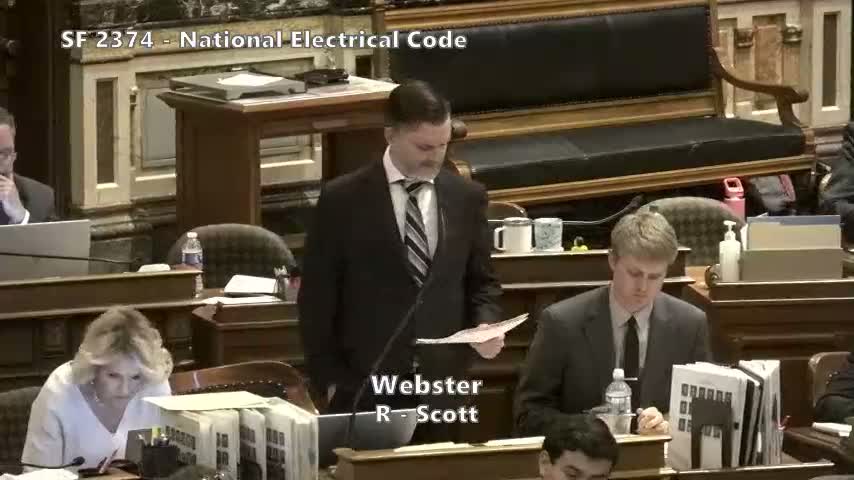
The Senate on the floor adopted Senate File 23‑74, a measure to adopt the 2023 National Electrical Code statewide and prohibit political subdivisions from enacting local electrical codes more restrictive than the NEC. Senator Webster, sponsor of the bill, said the measure is part of broader steps to make housing more affordable and to restrain what he described as special‑interest insertions into codes.
"Special interests spend their days getting their safety devices put into code so that they can make money," Webster said, arguing the bill removes needless regulatory barriers and preserves homeowner choice. He moved adoption of amendment 50‑45, which changes the bill’s effective date to upon enactment; the amendment was adopted.
Senator Townsend rose in opposition, identifying himself as an electrician and warning the bill would "water down safety requirements." He shared a personal account of a man electrocuted while inspecting a flooded basement and said, "Safety needs to come first. Otherwise, we're gonna be killing people." Townsend urged colleagues to vote no.
After debate, the Senate moved the bill for final reading and passage. The roll call recorded in the transcript reads 29 ayes and 15 nays; the bill was declared passed and the title agreed to. The sponsor asked that a related Senate file be withdrawn, and unanimous consent was later given to message the enacted measure to the other chamber.
Why it matters: The bill determines whether local governments can set electrical standards that differ from the statewide baseline. Supporters say the change reduces costs for builders and homeowners; opponents say it may remove locally tailored safety measures.
What happens next: The Senate recorded passage and ordered the measure messaged to the House. Any further steps (final enactment timeline, gubernatorial action) were not discussed on the floor during this session.