
Bill would bar public power suppliers from using eminent domain; utilities and landowners clash
Get AI-powered insights, summaries, and transcripts
Subscribe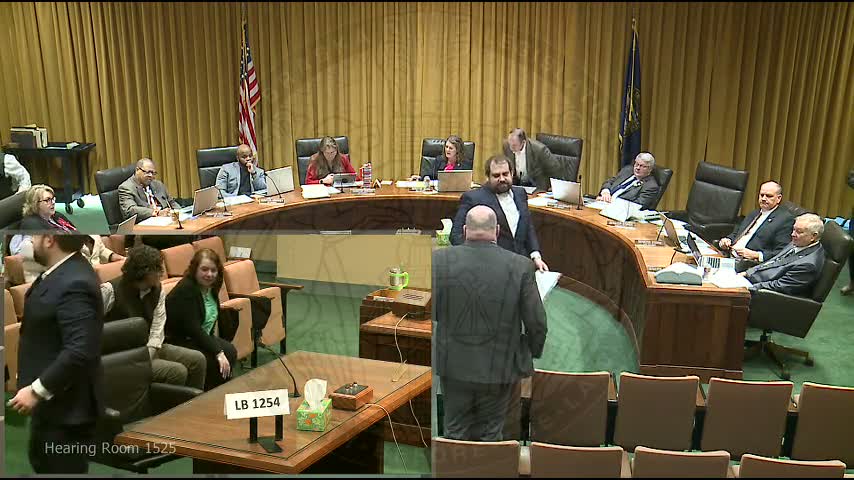
Summary
LB1255 would remove condemnation authority from public power suppliers and joint authorities, requiring voluntary acquisition for transmission and other projects; proponents said it protects private property, while public‑power representatives warned it would threaten reliability, increase costs and create holdout problems.
Senator Elliot Bostar introduced LB1255 to prohibit public power suppliers—including public power districts, municipal utilities and joint public power authorities—from exercising eminent domain. Bostar said the bill harmonizes public‑power statutes and returns emphasis to voluntary negotiations.
Proponents such as farmers, rural landowners and advocacy groups (Bold Alliance, Nebraska Farmers Union) warned that eminent domain has been used to compel takings that disproportionately burden individual landowners for projects that do not directly benefit them. Caleb Jackson and Jane Klev said voluntary negotiation preserves property rights and community trust.
Opponents including John McClure (NPPD), Steven Bruckner (Omaha Public Power District / Nebraska Power Association) and John Hansen (Nebraska Farmers Union) warned that eminent domain is a constitutionally recognized sovereign power and is necessary—rarely used but sometimes essential—to secure rights‑of‑way for transmission lines, substations and other infrastructure to maintain reliability and low rates. NPPD cited a high rate of voluntary easements on past projects but said removing eminent domain entirely would create holdout problems and raise project costs. Committee members debated the balance between landowner rights and public need; several senators asked about thresholds or guardrails but opponents said partial thresholds would not solve the holdout problem.