Bill would require large livestock integrators to file disaster mitigation plans with DHHS; agriculture agency urges coordination
Loading...
Summary
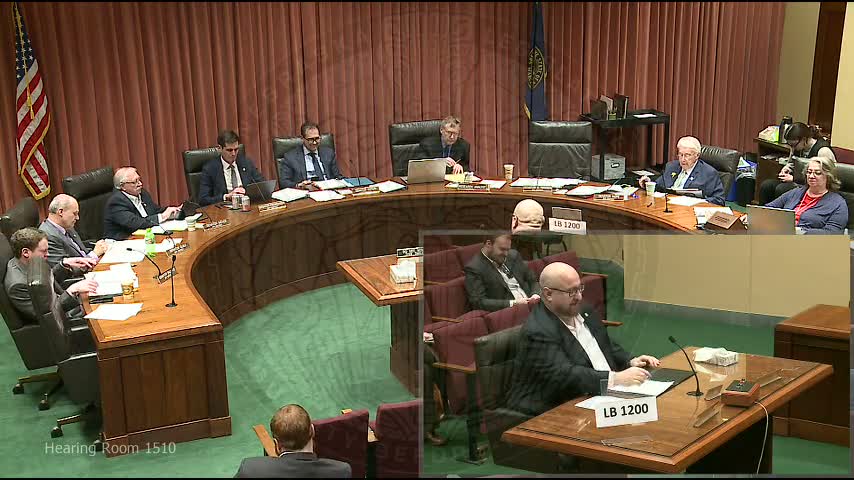
Sen. Duxi Goreca proposed LB1200, which would require large livestock integrators to submit annual disaster mitigation plans covering PPE, biosecurity, animal isolation and coordination with local authorities. Proponents cited recent avian influenza and other zoonotic risks; the Nebraska Department of Agriculture said it already maintains response plans and urged care to avoid interference with its statutory role.
Sen. Duxi Goreca presented LB1200, a bill that would ask large industrial livestock integrators to prepare and submit annual disaster mitigation plans to the Nebraska Department of Health and Human Services. The plans would address worker protective equipment, protocols to prevent disease spread, isolation procedures for affected animals, storage and distribution of PPE and coordination with local response agencies.
Supporters said the bill builds preparedness following repeated avian influenza outbreaks and that integrators play an outsized role in how quickly infections can spread. Edison McDonald of GC Resolve said the bill is about preparedness and lines of communication "before the next crisis arrives" and pointed to increasing detections nationwide.
Sherry Vinton, director of the Nebraska Department of Agriculture, testified neutrally and summarized existing state and federal planning: NDA maintains disease response plans, conducts exercises and coordinates with USDA and CDC. Vinton said NDA would be concerned if the legislation's plans interfered with the department’s animal‑disease response authority and that many federal/state plans (the hearing record cited the ‘‘red book’’ for high‑path avian influenza and the ‘‘green book’’ for parasitic threats) already exist.
Committee members asked whether the proposal duplicates federal and state resources, whether wastewater and environmental contamination issues would be covered (those fall under DEQ), and whether similar requirements exist in other states. The sponsor said the goal is facility‑level, practical readiness that ensures local public health and emergency managers can act quickly.
The hearing closed without a committee vote; sponsors said they would continue conversations with NDA and emergency management officials to refine the approach.