Get email alerts on the Performance Frameworks topic
No spam. Unsubscribe anytime.
Board reviews 2023–24 performance frameworks; EPIC audit issues and OYA data shortfalls highlighted
Summary
Staff presented final 2023–24 performance framework evaluations for EPIC Charter Schools, Insight School of Oklahoma and Oklahoma Youth Academy. EPIC's financial audit showed material weaknesses including a $4.2 million correcting entry; OYA lacked sufficient academic data due to short student stays and staff recommended a tailored framework for such programs.
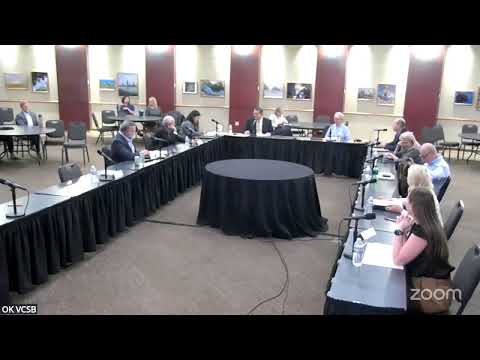
Statewide Virtual Charter School Board staff presented final performance framework results for three schools for the 2023–24 school year and answered board questions about academic outcomes, audits and oversight.
EPIC Charter Schools: Staff reported EPIC’s overall performance framework index at 70.64 for 2023–24. In the academic section EPIC scored 44.69 percent (7.15 of 16 possible points) but posted year‑over‑year proficiency gains in many grades and subgroups: several grades increased proficiency by 5 percentage points or more. Graduation data showed that of 3,177 seniors enrolled on the first day who were within six credits of graduation, 94.27 percent went on to graduate during the year. On finances, EPIC received an unmodified audit opinion for regulatory accounting but the audit disclosed material weaknesses in internal control and an accounting reclassification: approximately $4,200,000 in federal revenues had been reported as local revenues and required a correcting entry. Staff said those findings reduced part of EPIC’s financial points and that staff will continue oversight work and targeted audits.
Insight School of Oklahoma: Staff reviewed Insight’s alternate school framework results and noted differences in measuring alternative/virtual programs. The school’s financial score was strong (92.5 percent) and organizational score was near 97 percent; however the school holds an accreditation status of “accreditation with warning” tied to alternative‑school indicators. In academics, Insight showed some grade‑level gains (notably seventh and eighth grade ELA) and exceeded certain alternative‑school baselines for subgroup graduation rates. Staff said they will continue working with the school and the State Department of Education on ongoing accreditation concerns.
Oklahoma Youth Academy (OYA): Staff explained OYA operates inside the Office of Juvenile Affairs and serves students who are detained for relatively short terms. Because the unit had only seven students present long enough to meet the framework’s full‑year academic requirement (the minimum threshold is 10), staff said there was insufficient academic data to calculate conventional framework indicators. Staff recommended designing a separate framework for OYA and similar programs that focuses on the school’s mission and outcomes for short‑term placements; alternative indicators were reported where available.
Board members asked detailed questions about graduation cohorts, where students who do not graduate in year one typically go, and the nature of audit findings. Staff replied that some students return to community schools to graduate later and that EPIC’s audit exceptions were misclassification issues rather than missing funds, with corrective entries planned.
Staff said they will begin targeted curriculum audits and data dives in the coming month and will present results to both the board and each school's governing board in open meetings as required by statute.
Next steps: staff will arrange presentations of each school's final results at the respective governing boards and will pursue follow‑up audits and oversight work where financial or accreditation concerns exist.
AI generated
The text on this page is AI generated. Summaries, highlights, analysis, and video transcripts are all produced from the original source material.
AI can make mistakes, so if you spot one, and we will fix it for everyone.
Note: the source content is unaltered by us. Any content source we link to, be it a video, an audio recording, or a document, is presented exactly as its publisher released it. That publisher is usually a government body, sometimes an individual official or another organisation.